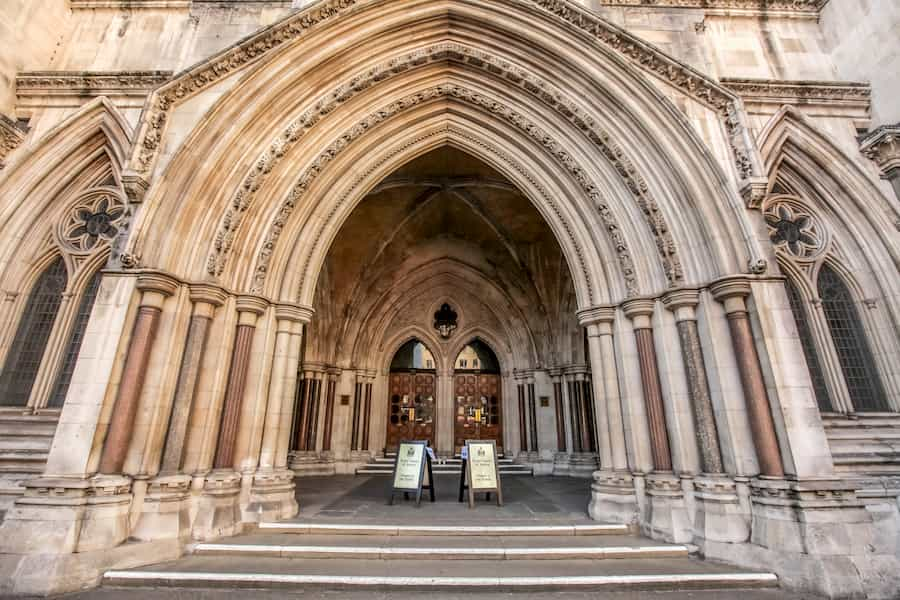

A High Court appeal has found that foreign judgments dealing with succession can be recognised as registrable under English law.
Sidoli and anor v. Sidoli and anor [2026] concerns whether Italian succession judgments could be enforced under The Foreign Judgments (Reciprocal Enforcement) Act 1933.
The appeal considered “whether the English court should register a foreign judgment under ss.(1) and 2(1) of the Foreign Judgments (Reciprocal Enforcement) Act 1933 where that foreign judgment is based on the foreign court’s application of its own laws in relation to inheritance and is made against persons domiciled in the UK who would be recognised under English law as the beneficiaries of the estate of the deceased.”
The Honourable Mr Justice Thompsell concluded foreign judgments can be registered under the 1933 Act, but specified that it is necessary to characterise the subject-matter of those judgments and recognise parts of them.
The appeal supersedes an earlier Sidoli v Sidoli [2025] EWHC 1425 (Ch) judgment which aligned with Del Curto v. Del Curto. Last year, a judge refused to register an Italian judgment regarding succession, holding that it fell within the exception in FJ(RE)A 1933, section 4 regarding the “administration of estates”.
The latest judgment arose out of an ongoing and lengthy international family dispute following the death of Davide Giovanni Antonio Sidoli. Davide and his father, Quintilio Sidoli, who died six years before his son, both lived and were domiciled in England when they died, despite being Italian citizens.
The appeal was brought by Antonio and Andrea Sidoli who say Davide is their father. Davide, however, denied that he was their natural father and disinherited them. He left his estate to his brother, Dante, and sister-in-law, Anna.
The paternity of Antonio and Andrea is still disputed by Dante and Anna. However, the courts in Italy accepted that Davide was indeed their father, and awarded them rights to his estate.
Davide died on 14 September 2006 leaving an English will dated 22 August 2006, stating his residence to be St Joseph Hospice in London, leaving his estate to Dante and Anna.
It included the following statement: “For the avoidance of doubt I take this opportunity to confirm that it is my wish that neither of my former wife’s sons namely Andrea Sidoli and Antonio Sidoli shall receive any part of my estate as BOTH sons were born to my then wife … during our marriage but I was not their natural father and I consequently take the view that I have no moral obligation to make any financial provision for them from my estate and I FIRMLY TAKE THE VIEW that my said brother and sister-in-law on my closest living relatives.”
His father Quintilio, who had died four years earlier, left a will dated 12 October 2000, describing his residence as 3 Broadfield Avenue in London. That will appointed Dante as executor, and it gave the property at Broadfield Avenue to be held on a trust which permitted Quintilio’s sister-in-law, Inez, to live in it, and gave the sum of £100,000 to Davide. It also left the residue of the estate to Davide.
Quintilio also left an Italian will in Italy which left his whole estate to Davide.
Italian succession law provided legal grounds for the challenge brought by Andrea and Antonio, which is why the claimants chose not to bring proceedings in the UK.
The claimants were both born in England and spent their early childhood here. Around 1985, following their mother’s divorce from Davide, they relocated to Italy, where they continue to live to this day.
Following a lengthy legal process started in Italy in 2012, the Court of Appeal in Bologna awarded Andrea and Antonio the sum of €381,796.31, including their costs, in 2022.
Andrea and Antonio brought proceedings to a UK jurisdiction in November 2023 to have the Italian judgment registered and enforced. The English proceedings were successfully defended and concluded within 12 months.
In December 2023, an application to register the Italian judgment in the jurisdiction of England and Wales under the Foreign Judgments (Reciprocal Enforcement) Act 1933 was made.
The respondents, Dante and Anna, successfully applied to the UK courts to set aside the original order and sought to transfer the case to a specialist court.
In May 2025, the case was heard at the Chancery Division at the High Court in London before Deputy Master Dew.
Deputy Master Dew dismissed the application, holding that the Italian succession judgment could not be registered under the 1933 Act.
Handing down his judgment on 29 October 2026, Mr Justice Thompsell allowed registration of part of the Italian judgment.
Justice Thompsell concluded: “The Deputy Master was correct in his finding that the court should set aside, (and in this case refuse to register) a judgment of the Italian court that purported to deal with the inheritance of the assets of persons domiciled and resident in England, but in my view only insofar as the assets to be inherited constituted assets situated in the United Kingdom, and succession in the case of an individual who was domiciled in England.
“He reached that conclusion in two different ways – first by finding the 1933 Act probably did include, within the definition of ‘administration of estates’ matters concerning succession.”
Thompsell said this was “by no means clearly a wrong conclusion” but said Deputy Master Dew’s judgment took the view that almost the whole succession relating to Davide concerned rights over the property at 3 Broadfield Avenue and therefore, refused to register the entirety of the Italian judgment. He said the judgment “went too far in doing this”.
Almost €800,000 is now set to be distributed among the brothers, Antonio and Andrea.
The judge calculated the value of Davide’s Italian estate as €410,855.93, plus two thirds of his worldwide estate (a third each for Antonio and Andrea) at €273,923.95, plus €45,865.79 for their share of Italian property already transferred to Dante and Anna, and €46,110.07 in costs.
The judge said a short hearing should be listed as soon as possible “to deal with any consequential matters including costs and any application for permission to appeal”.
During the appeal process in England, Dante, died. His wife, Anna, is now the sole respondent.
Sarah Egan was instructed by Pini Franco for the appellants’ while: R K Sahonte was instructed by DMH Stallard LLP for the respondents.