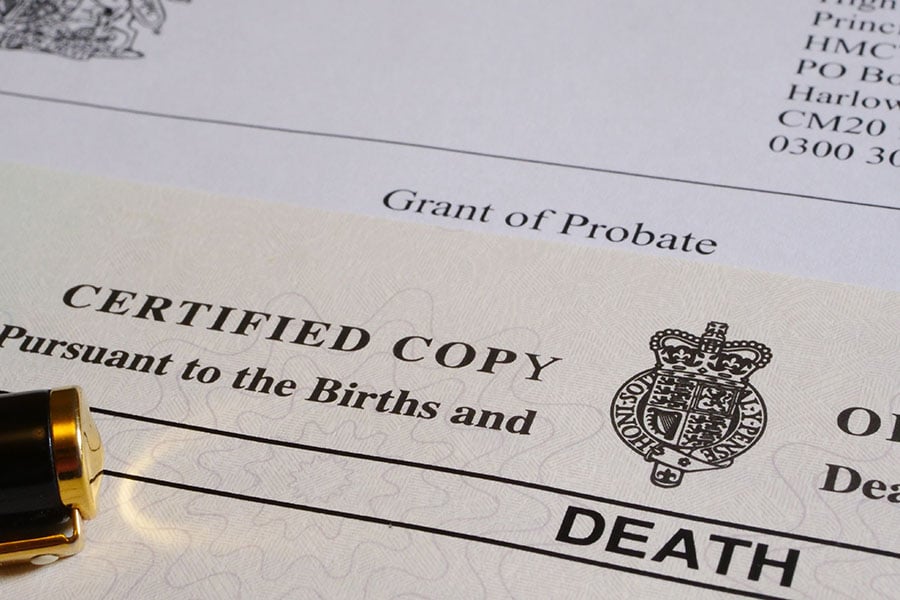

New Ministry of Justice figures finds since 2020, paper Grant of Probate applications have dropped by 88%, while paper applications for Letters of Administration are down just 3%.
The data, analysed by David W Harris & Co, shows between 2020 and 2025, paper applications for a Grant of Probate fell from 144,184 to 17,481, a drop of 88%. Paper applications for Letters of Administration fell from 30,617 to 29,736, a drop of just 3%.
The firm says paper applications for Letters of Administration also take considerably longer. In April to June 2026, they took an average of 14.2 weeks, compared with 5.0 weeks for digital applications. Analysis found they have taken around 3 times as long as digital applications for 3 consecutive quarters.
The gap has grown since 2020. The difference between average paper and digital waits for Letters of Administration has risen from 2.9 weeks in 2020 to 7.1 weeks in 2025. Over that period, paper wait times rose by around a third, while digital wait times fell by around a fifth.
Average waits for Letters of Administration as a whole rose from 8.3 to 8.8 weeks, while waits for a Grant of Probate fell from 6.8 to 5.1 weeks.
Further analysis of the study found personal applications for Letters of Administration rose from 19,109 in 2020 to 27,850 in 2025, an increase of 46%. Solicitor applications rose 12% over the same period. Personal applications now make up 54% of all applications for Letters of Administration, up from 47% in 2020.
Tom Baker, partner for Wills and Probate at David W Harris & Co, said, “These figures point to a two-speed system. Where someone has left a will, almost all applications are now made online, and waits have come down since 2020.
“Where there’s no will, waits have gone the other way. Most applications are still on paper, and those paper applications now take around a third longer than they did in 2020, often at one of the hardest points in families’ lives.”
“Letters of Administration were left out of the 2020 rules, and the figures show the gap that has opened up since,” Baker added.
“Estates without a Will are often where families need the most guidance, so with more people now applying themselves, there’s a clear role for practitioners in helping them understand what’s involved before they apply.”