
An “increasing number of bad lawyers” are contributing to a consistent and accelerating increase in contentious probate activity identified by a freedom of information request to the Probate Registry.
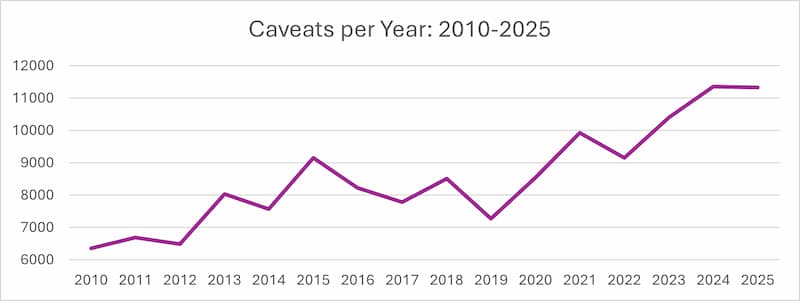
An analysis by Birketts LLP has revealed 11,328 caveats were filed in 2025 – a figure which has risen steadily since 2010.
The reasons behind the increase, according to Barny Croft, partner in Birketts’ private wealth disputes team, include “badly drafted wills and an increasing number of bad lawyers encouraging people to pursue lousy cases”.
The generational wealth gap also plays a role in the rise in will disputes, Croft said, along with an ageing population, increased life expectancy, more people living with dementia, complex family structures and high value assets.
The freedom of information request submitted by Birketts’ private wealth disputes team – which has more than doubled over the last five years to accommodate demand from individuals seeking advice on wills and the administration of estates – provides clear evidence of a trend in challenges to wills, the firm said.
The data shows an average year-on-year growth in caveats of 4.59% since 2010, rising to an average of 6.20% in the last five years. In 2023, caveats exceeded 10,000 for the first time, and in 2024 the number of caveats reached 11,362.
The research highlights three key factors behind the increase: an ageing population and increased vulnerability, predatory marriages and complex family structures, and poorly drafted wills in part due to the legacy of the Covid‑19 lockdown.
With 19% of the UK population now aged 65 or over, the implications for testamentary capacity and susceptibility to influence are significant, Birketts explained. The increased prevalence of dementia, with age being the greatest risk factor, has led to more wills being challenged on the grounds of capacity or undue influence. Cases such as McLean v McLean highlight disputes arising from late‑life remarriages, blended families and competing expectations, the firm added.
More people entering second or third marriages later in life are resulting in a rise in complex family structures and triggering disputes between children from earlier relationships and new partners, according to Birketts’ analysis. In more serious cases, the firm explained, predatory marriages – in which younger people exploit vulnerable testators – are leading to greater scrutiny of the circumstances in which wills were executed.
The sharp increase in caveats between 2019 and 2021 coincided with lockdown‑era will making. Birketts explained: “With many unable to meet solicitors face‑to‑face, there was a surge in homemade wills and documents prepared without appropriate assessment of capacity or undue influence.”
Birketts recent case Leonard v Leonard illustrates the challenges arises from such wills, the firm said. Given demographic trends and the volume of wills prepared “under less than ideal conditions” during the pandemic, the firms expects the upward trajectory to continue.