
A disinherited son’s application to have his father’s will overturned due to undue influence from his partner has been rejected.
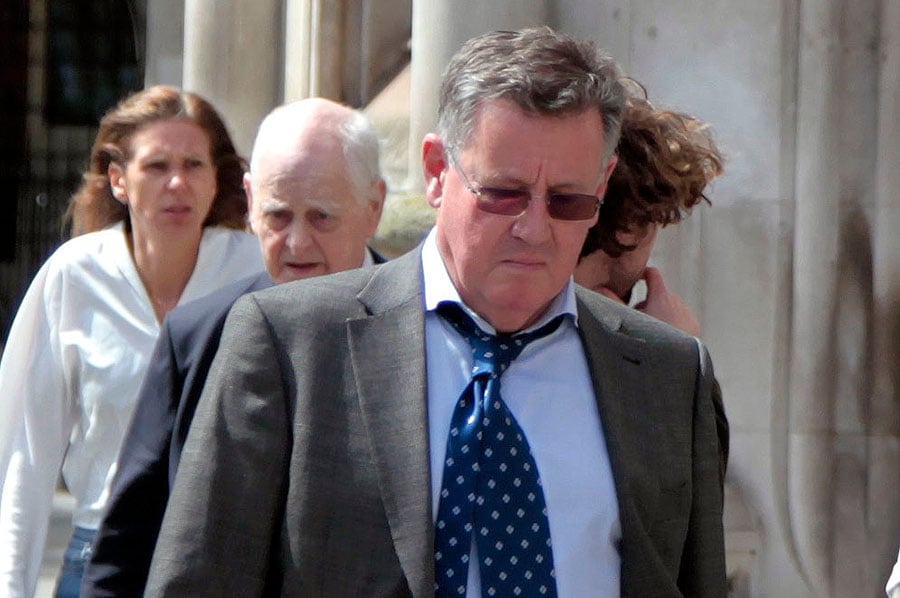
Jonathan Saville Thurston (pictured) claimed a 2019 will made by his father, John Saville Thurston, which left his entire £500,000 estate to his partner Hannah Shabathai, was invalid.
A 2013 will had been made in favour of Jonathan and his sister Katrina Thurston Lew, who dropped out of the claim before the case reached court. Jonathan told the court there was “substantial evidence of coercive control” exercised by Ms Shabathai over her partner, with whom she was in a relationship for five years until he died in 2022.
But he abandoned the case, in which he represented himself, on the first day of the trial, telling the judge he was struggling to manage the material involved in the litigation due to dyslexia and neurodiversity. He must now pay costs estimated at £216,000.
Barny Croft, partner in the private wealth disputes team at Birketts LLP, said the case should never have been brought.
“Probate litigation exists to resolve genuine disputes, not to re-litigate family grievances or to punish a surviving partner simply because they are unpopular,” he said.
“This case hinged entirely on whether the deceased’s partner unduly influenced the deceased into making his last will.
“Undue influence is one of the hardest allegations to prove in probate cases. It is not enough to show that a testator was elderly, unwell, or emotionally close to someone who benefited from the will. There must be clear evidence that testator was coerced into making the will. There was no such evidence here.
“The deceased made his 2019 will of his own accord, with the help of his longstanding solicitors, and for reasons he clearly explained.
“The case also highlights the very real financial risks of bringing speculative probate claims. Will challenges are not cost‑free and when a claim collapses or is abandoned, the losing party can be left facing substantial legal bills, as happened here.”
Ms Shabathai’s barrister, James Poole, told Central London County Court that Jonathan had branded Ms Shabathai a “narcissistic psychopath” who had “ruthlessly preyed” on John Thurston prior to his death.
Denying all the claims on her behalf, he told Judge Nigel Gerald that she had no need for Mr Thurston’s money, as she was already “financially very secure and much wealthier than the deceased”.
Mr Poole told the court that John Saville Thurston was aged 81 when he died and had worked as a property developer, based in the Wirral.
In written submissions to the court, Mr Poole explained John Thurston and Hannah Shabathai had moved in together in around January 2017, “and thereafter they lived together as effectively husband and wife for the rest of his life”.
The couple made mirror wills in 2019, replacing Mr Thurston’s 2013 in favour of his children. Mr Thurston explicitly told his solicitors that “he chose not to make any provision for his children because he had already given them enough money during his lifetime”.
After he suffered a stroke in 2021, Ms Shabathai became his primary carer and helped hospital staff look after him.
The barrister told the judge that when the relationship first began, Mr Thurston’s children “welcomed her presence in their father’s life and considered her a kind and loving person”.
But they had subsequently “tried to rewrite history” by challenging the will, he said.
Jonathan’s claim was motivated by resentment towards Ms Shabathai, Mr Poole told the court.
None of the “scurrilous” allegations had any bearing on the 2019 will, he said, adding: “What the defendants instead have tried is to concoct a narrative that Ms Shabathai was generally coercive and controlling over the deceased and that the 2019 will was made in this context.
“This approach contradicts the actual evidence in this case and in particular that the will was made at the deceased’s own instigation and with his longstanding solicitors.
“The 2019 will was a natural result of John’s affection for Ms Shabathai and also a result of the complex relationship that he had with his adult children. It was made in the context of her also making a will which left a far greater amount to John than she was left by him.
“Jonathan’s challenge to the making of the will on the basis of undue influence really appears to be little more than an emanation of his animosity towards Ms Shabathai.
“There is no evidence whatsoever of coercive control by her – either generally or in relation to the 2019 will.”
Jonathan briefly cross-examined Ms Shabathai and questioned her about the issue of undue influence, asking: “Do you accept that the 2019 will was prepared when the deceased was vulnerable?”
“That’s not correct,” she replied, saying her partner was a vital and healthy man until afflicted by the stroke in 2021.
“He was a man of decisions – his own decisions – he was not a man to be influenced,” she said, adding that she had no involvement in preparing his will.
“He was a very level-headed and fit man given his age, there were no concerns apart from his heart at the time,” she added, also denying claims that she ever deterred John’s family from visiting him in the years leading up to the 2019 will being made.
Abandoning his claim, Mr Thurston told the court: “I can’t manage this, so that’s why I am agreeing to stop,” explaining that he has problems with dyslexia and neurodivergence which made it hard to cope with the vast amount of documentary material involved in litigation.
Judge Gerald said the 2019 will in favour of Ms Shabathai would now be admitted to probate, noting Jonathan had fought his case “right up to the wire” despite having no real evidence or grounds for his claims.
“Very serious allegations were made, but it was difficult to see any real basis for founding the claim,” he said.
“Here – as far as I can tell – the reasons for the abandonment of the claim by Mr Saville Thurston was recognising that there was simply no basis for it, but also that he simply wasn’t properly prepared to cross-examine.”
There was, he said, “no meritorious basis for the claim at all,” also noting: “the purpose of probate litigation is to resolve genuine disputes, it is not to be used as a forum for pursuing unmeritorious claims”.
Jonathan was ordered to pay Ms Shabathai’s costs, estimated at £216,000 with £144,000 up front.
Katrina Thurston Lew, who had abandoned her opposition to the 2019 will shortly before trial, was also ruled liable for the costs’ bill until the date she pulled out of the litigation, although she was given time to appeal that decision due to being absent from court.
Image courtesy of Champion News