
Lawyers have rejected claims by Baroness Deech that cohabitation reform has no public mandate and will create “profound constitutional change”.
In a statement accompanying her response to the government’s consultation on cohabitation rights and proposals for automatic legal rights, the baroness, Ruth Deech, issued a warning to justice secretary Alex Norris.
Marriage and civil partnerships are legal relationships that people freely choose to enter into, she warned, and the proposals would “create legal obligations without either partner making that choice and people may not even realise those obligations have been imposed on them”.
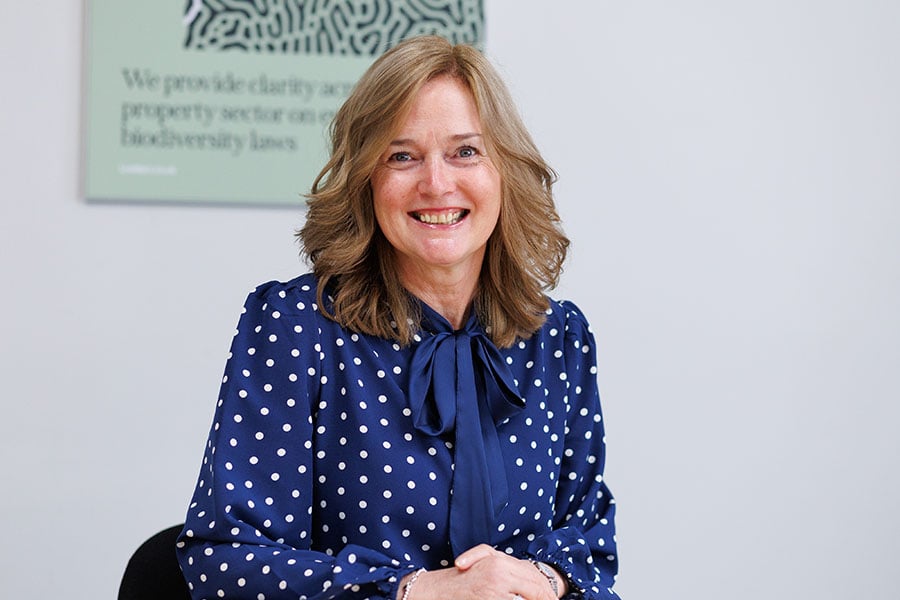
In a lengthy response, Jo Edwards, chair of Resolution’s Family Law Reform Committee and partner and head of family at Forsters, rejected the claims, and said there is a “clear democratic mandate” for reform.
“Strengthening protections for cohabiting couples was a Labour manifesto commitment, endorsed at an election that delivered a substantial parliamentary majority” she pointed out.
“A recent poll from Survation, which found that 37% of respondents supported the reform proposed, cannot negate that mandate, particularly when decades of evidence show widespread misunderstanding of the present law. The same survey showed that the public is evenly divided on whether reform is needed at all (42% say the current law is broadly adequate, 41% believe new rights are needed).
“The British Social Attitudes Survey found that 46% wrongly believed in “common-law marriage”, virtually unchanged from 47% in 2005. The strong case for reform is that millions reasonably expect protections which the law does not currently provide.
“The proposals do not secretly impose marriage or create an equivalent ‘third status’. They simply establish a safety net for relationships which meet clearly defined criteria and rights that would fall far short of those for married couples.
“Opposite-sex civil partnerships already provide an opt-in route, yet in the almost 7 years since they were introduced for opposite sex couples have barely been taken up, meaning that they have not remedied the vulnerability of people who do not formalise their relationships or mistakenly believe they are protected.
“Nor should one partner have a unilateral power to remove the other’s statutory protection which could allow the economically stronger partner to impose an opt-out through pressure or ultimatum. A mutual, informed opt-out better balances autonomy with protection.”
In response to claims the reforms could create up to 10,000 more cases for the Family Courts, Edwards added: “Predictions of thousands of additional contested cases fall wide of the mark. ‘Fair Shares’ research 3 years ago found that currently only 3% of couples needed a judge to determine their finances on divorce (with a further 2.5% having settled after court proceedings started), and mediation and other non-court dispute resolution are increasingly embedded in family practice. Other changes suggested in the proposals, such as the plan to give greater prominence to marital agreements and to simplify the law around finances on divorce, should lessen the strain on the courts.”
“Overall, Baroness Deech’s resistance to reforming cohabitation law fails to acknowledge the circumstances of 3.5 million couples across the UK. The law needs to keep pace with the way people live today.”
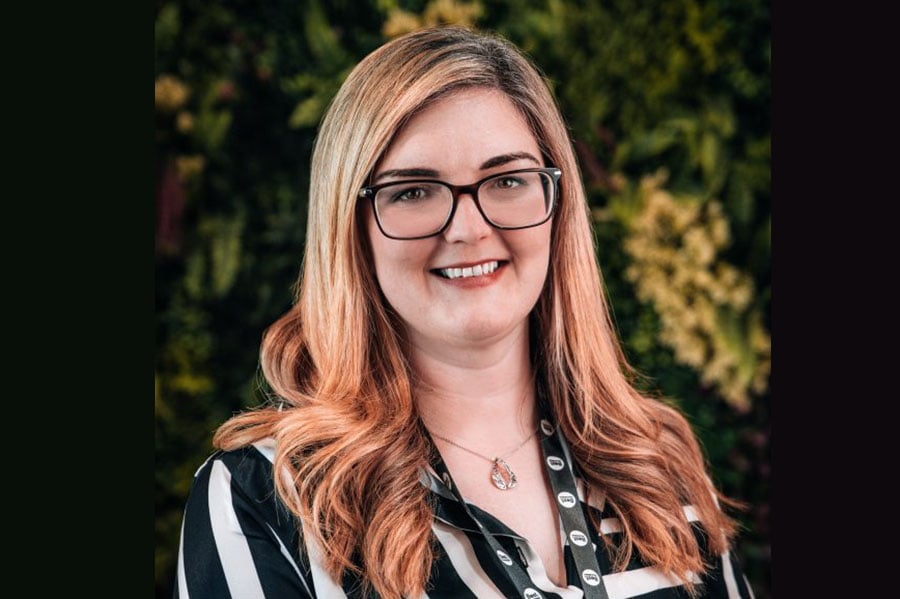
But Laura Tanguay, partner and head of home ownership disputes in the property disputes team at Birketts LLP, believes Baroness Deech is right to raise the issue of consent and says the lack of public awareness surrounding the legal status of cohabitation calls for more education, not greater legal complexities.
She explained: “One of the most striking aspects of the government’s proposals is the apparent disconnect between the scale of the reforms and public awareness of them.
“These are not technical changes affecting a small minority; they would fundamentally alter the legal consequences of cohabitation for millions of couples across England and Wales.
“Marriage and civil partnership are legal statuses entered into consciously. By contrast, the proposed framework would apply automatically to qualifying cohabitants based on the length of cohabitation or the fact that they have a child together, regardless of whether they were aware of the regime or intended to assume those legal consequences.
“Baroness Deech is therefore right to raise the issue of consent. Many couples choose not to marry or enter into a civil partnership precisely because they do not wish to assume the legal consequences that accompany those relationships. It is legitimate to ask whether similarly significant obligations should arise without any positive act of choice.
“Whatever the merits of reform, changes of this magnitude are unlikely to command public confidence if people only discover that they are subject to a new legal framework when their relationship breaks down. Public awareness and informed choice should be central to any reform.
“There is also a wider issue of public understanding. The government has identified widespread confusion about the legal status of cohabitation, including the persistence of the ‘common law marriage’ myth, as part of the case for reform.
“Yet the proposed framework risks making an already complicated area of law even harder for the public to navigate. It would add another layer of legal distinction, with different regimes applying to married couples, qualifying cohabitants, non-qualifying or opt-out cohabitants, and other co-owners. It is difficult to see how adding further complexity will, in itself, address the underlying problem of public misunderstanding.
“There is a strong argument, therefore, for greater public education about the law as it already stands, including the protections available through measures such as declarations of trust and cohabitation agreements. That may do more to address the underlying problem than adding another layer to an area of law that is already widely misunderstood.”