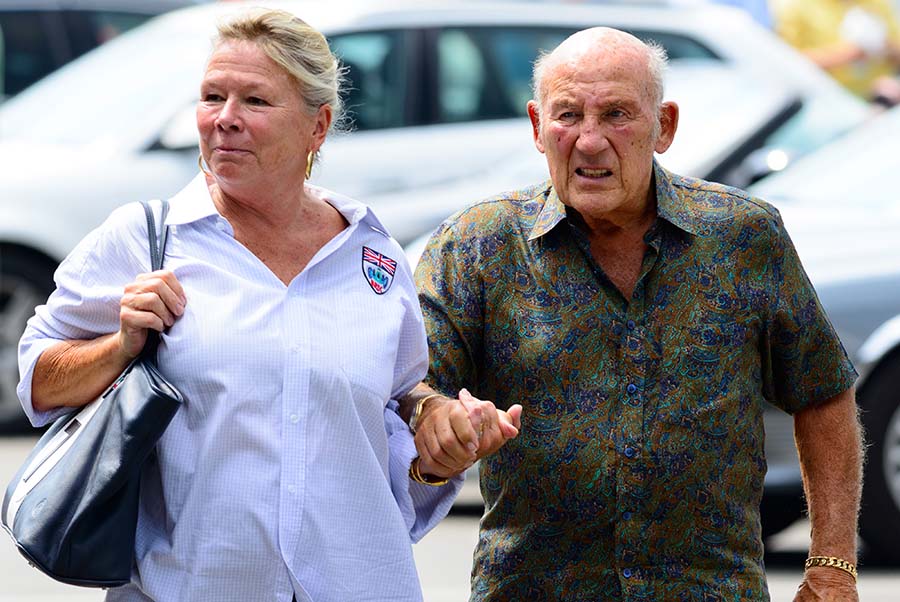

The High Court has received allegations of probate fraud in proceedings between the children of motor racing legend Sir Stirling Moss over the £27.8 million estate of his widow, Lady Susie Moss, who died in 2023 (the couple pictured in 2015).
The dispute involves Sir Stirling’s daughter from his second marriage, Allison Bradley, and his son from his third marriage to Lady Moss, Stirling Elliot Moss. Following the death of Sir Stirling Moss in 2020, most of his estate passed to his third wife.
Bradley brought proceedings in November seeking to uphold a January 2022 will as her stepmother’s final testament, which left Bradley to decide if and how Moss should benefit from his mother’s estate following a breakdown in the relationship between mother and son.
In a 2022 draft letter of wishes, Lady Moss wrote:
“At the date of this letter, my relationship with Elliot is difficult and we are not speaking. I would therefore like Allison and her children to be the primary beneficiaries of the Trust. However, I have included Elliot and his children as potential beneficiaries of the Trust as he is my son and I hope our relationship will improve in the future. If my relationship with Elliot improves before I pass away, I would like Allison to decide how to benefit Elliot and/or his children from the Trust when I pass away. This will be completely at her discretion and could be a 50-50 split or first bringing into account the company shares he has already received and dividing the balance 50-50.”
In response to Bradley’s claim, Elliot Moss argued that an earlier 2002 will should be treated as his mother’s binding testament, which he claims included a letter of wishes dividing the residuary estate between the half-siblings, 75% to 25% in his favour.
The counterclaim alleges Lady Moss’s 2022 will was “procured by undue influence and fraudulent calumny,” and that she lacked capacity to manage her affairs due to alcohol dependency and depression. Bradley’s submission denies these claims, stating Lady Moss had capacity to make a valid will despite periods of alcohol dependency.
Kate Harris, partner in the private wealth disputes team at Birketts LLP, said such disputes highlight the intersection of grief, family dynamics and legal uncertainty.
“When large estates pass through multiple wills or involve discretionary trusts, disagreements can escalate quickly, especially where questions of mental capacity, undue influence or historic family tensions are raised,” she said.
“The allegations in this case underscore why it is so important for individuals to receive clear, independent advice when updating their wills, and for those managing the affairs of vulnerable adults to document decisions carefully.
“Claims involving alleged lack of capacity or undue influence are among the most challenging in the field. They require detailed medical evidence, contemporaneous records, and a clear understanding of the family context.
“Where a discretionary trust is involved, as here, beneficiaries can feel particularly uncertain because their entitlement is not fixed. This often fuels disputes, especially if they believe the intentions of the deceased have been overridden or misunderstood.
“Ultimately, cases like this are a reminder that even the most high-profile and carefully planned estates can become the subject of conflict. Early legal advice, transparent communication and robust record‑keeping are the best safeguards to ensure that a person’s true wishes are honoured and to minimise the risk of lengthy and emotionally draining litigation.”