
The daughter of an explorer killed in a mountain avalanche eight years ago has taken a dispute over his £10m estate to the High Court in a bid to remove his wife as executor and co-trustee.
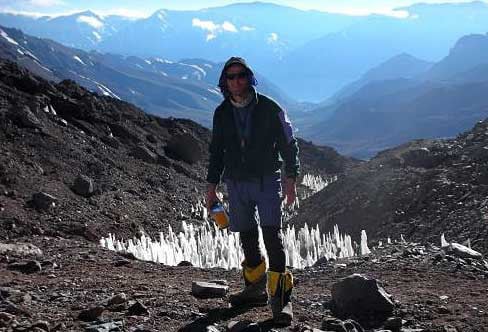
Paul Samuel, 55, a mountaineer and entrepreneur, was killed along with two other climbers in June 2018, during an avalanche while scaling the Alpamayo peak in the Peruvian Andes.
Samuel’s £10m estate was to be shared roughly equally between his wife, Ana Lesiak Samuel, 59, and his daughter from a previous relationship, Kate Samuel, 25. Eight years on, however, the estate has still not been fully distributed, and the case has come to the High Court twice.
In a half day hearing, Judge Master Francesca Kaye, heard that “a strained relationship” between the explorer’s partner, daughter and a lawyer appointed to oversee the distribution of Samuel’s fortune had led to years of delay.
Kate Samuel and will trustee lawyer Anna Unett are asking the court to remove Ana Samuel, as executor of the estate and co-trustee of the will trust, blaming the delay on her and accusing her of costing the estate money.
The dispute previously reached the High Court in 2023 over disagreements about the value of estate assets and how they ought to be divided. At the time, Ana Samuel failed in a bid to remove Unett and Paul’s dad – who later died – as trustees. Despite a judge having given directions on how the assets should be shared, a further three years have now passed and the estate has still not been distributed.
During the latest High Court proceedings, the judge heard that most of the explorer’s wealth, which included £780,000 Bank Farm, near Whitchurch, Shropshire, had been put into a trust. Samuel’s daughter Kate has so far received approximately £1m and his wife, Ana, inherited the farm and another property.
Barrister Julie Case, acting for Samuel’s daughter, told the judge: “Kate believes that Ana is unsuitable to act as an executor. Kate supports Ms Unett’s application and asks the court to remove Ana as executor and trustee and appoint Ms Unett as executor in her place.
“The relationship between Ana and Kate has been strained for some time. Even when her father was alive, Ana and Kate did not enjoy a close relationship and the relationship became even more tense after the deceased’s death, with Ana refusing to allow Kate’s mother to attend with Kate at her father’s memorial service in London.”
Alexander Learmonth KC, said: “Ana resists her removal as executor: there is simply no proper ground for doing so. Removal of any personal representative is a ‘drastic step’, not to be undertaken lightly, especially when she is Paul’s widow and an executor explicitly chosen by him and entrusted with the administration of his estate and the trust thereunder.
“As well as having been Paul’s wife and chosen executor, Ana is an experienced professional with an MBA and a career in business finance.”
The barrister went on to blame the trust’s lawyer for the delay. “By wrongly insisting that Ana’s grant was issued by mistake, by refusing to hand over the estate administration files, by refusing to answer questions about the administration, and by maintaining a procedurally defective application, Mrs Unett’s actions have resulted in very substantial delay and wasted cost.
“The application as brought is defective and should be dismissed.”
Unett’s barrister Mark Baxter claimed administration and distribution of the estate had in fact been “delayed and complicated by Ana’s conduct.” He said: “It seems difficult for Ana to complete the estate administration properly and to the satisfaction of Mrs Unett as a trustee of the will trusts and Kate as a beneficiary of the distribution.
“Generally, Ana’s approach to all matters related to the estate is uncooperative, if not combative.”
The case was adjourned, but is due to return to court at a later date.