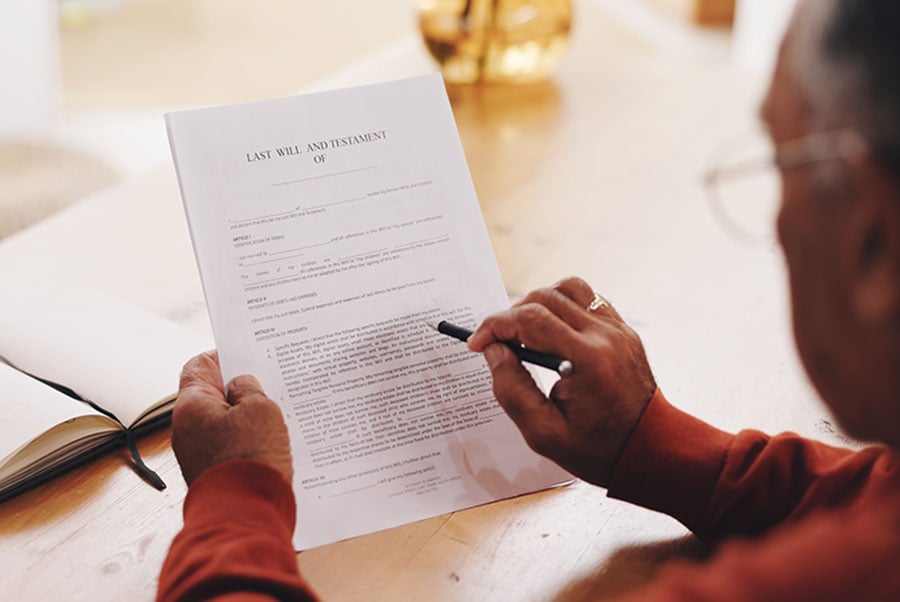
Women are four times less likely to get help with the admin of death, with newly published research showing men were four times more likely than women to pay a professional to handle estate admin.
The YouGov survey of 1200 respondents, 51% of whom had lost a loved one over the past five years, commissioned by Octopus Legacy, found women disproportionately shoulder more of the administrative burden when a loved one dies.
The survey found more than half (56%) of women handled most or all of the estate administration process themselves, compared with 43% of men. Women were more likely to have contacted every category of organisation tracked in the research, including banks (86% of women vs 69% of men), local councils (69% vs 58%), pension providers (66% vs 56%), utility companies (66% vs 54%) and insurance companies (54% vs 45%).
More than half of women who managed an estate while working (53%) said their employer could have done more to support them, compared with a third of men (33%). Only 8% of bereaved workers got any practical support from their employer; a quarter (26%) said they received no support at all.
The typical response of employers was to offer bereavement leave (55%) and/or offer flexible working (24%). But support with the practical elements of the estate administration was “rare”.
Overall, 80% of bereaved workers managing an estate said it damaged their ability to do their job. More than half (53%) did at least some of that admin during their usual working hours, and four in ten took additional leave or reduced their hours on top of any bereavement leave received. Women left to handle death administration were more likely to miss workdays (33% vs 22%), to report difficulty concentrating (37% vs 28%), and to take sick leave on top of any bereavement leave provided (24% vs 11%).
Sam Grice, founder and CEO of Octopus Legacy, commented: “Women have always absorbed more of the invisible labour that comes with caring for others. That doesn’t stop when someone dies.
”This isn’t a niche issue. Everyone deals with death, and yet it’s still not a core part of how employers think about supporting their people. The gender gap in how that burden is shared is significant, measurable, and fixable.“
Natalie Quilter, head of reward, wellbeing and benefits at The Hyde Group, said: “Bereavement is something that will touch every one of us, yet it remains one of the least developed areas of workplace support.
“One of the biggest gaps in bereavement support that I have seen is the sheer volume of administration that follows a death – legal tasks, paperwork, notifications, financial steps. It’s overwhelming, and it’s rarely acknowledged in workplace policies.”