


The great wealth transfer is encouraging a rise in inheritance disputes, say professionals, as figures from the High Court show a double digit increase in the number of cases.
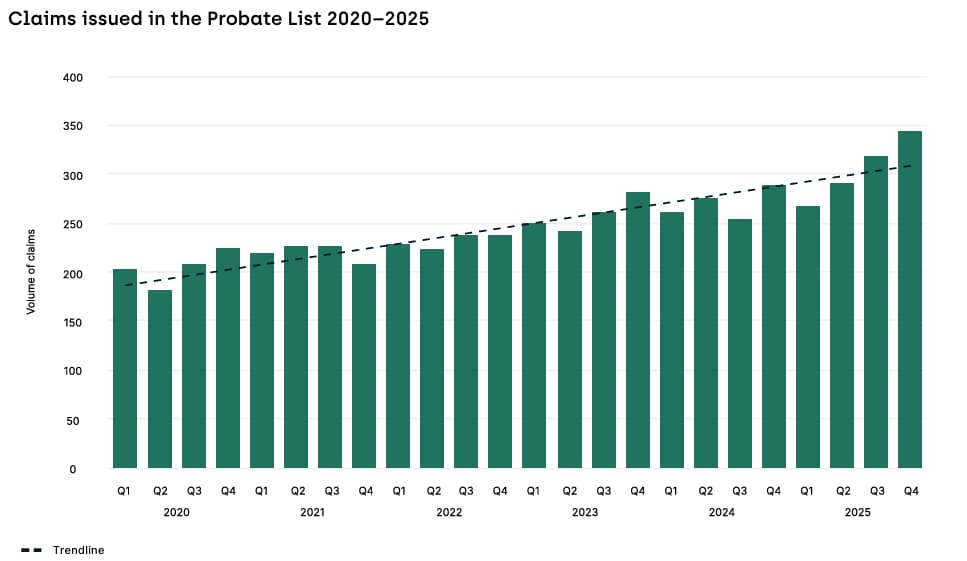
More than 1,200 disputed probate cases were filed at the High Court in 2025 according to data from Solomonic; an increase of 13% year on year. The legal data platform said drivers of litigation included the blended nature of modern families; an aging population with increasing challenges to testamentary capacity; the value of estates and the cost of living; and “public appetite” for “both litigation and for DIY or cheaply prepared professional wills”.
There were 342 claims in the last three months of 2025, the highest figure by quarter in the last decade. The annual total of 1,217 in 2025 is up from 1,080 in 2024, and 816 in 2020.
Despite the Law Commission’s landmark Modernising Wills Law report in May 2025 recommending the Victorian legislation be brought into the 21st century, the government has not implemented any of the recommendations outlined. In the last month, the Law Society has called on law-makers to “act now” and implement the reforms outlined in the draft bill accompanying the Law Commission’s report, warning that failure to do so would continue to deny people access to justice and protection of their last wishes.
Commenting on Solomonic’s data, Andrew Bishop, partner at Rothley Law said probate claims have increased “significantly” over the last decade, prompting an influx of talent into the sector.
“Legislation governing wills is from the Victorian era, but whilst some changes have been made to support blended families, there has been no serious attempt to update the law of wills (unless the Law Commission proposals are taken forward). The increased divorce rates and second (or more) marriages create more disputes between children and new spouses. At the backbone of this area is the Inheritance Act which has been used more widely to challenge testamentary decisions when modern families are involved.”
An aging population is more prone to dementia and Alzheimer’s, he added, with capacity an increasingly complex issue. At a time when the cost of living crisis is acute, and with over-55s holding an estimated £3.7 trillion of property wealth as of 2022, the transfer of wealth from the Baby Boomers to the next generations is also driving increased claims; this trend will only continue to rise, Bishop said.
Last week the Financial Conduct Authority launched a market study into later life mortgages to determine how prepared the market is to meet consumers needs now and in the future. The regulator suggested lifetime and retirement interest only (RIO) mortgages could play a greater role in enabling consumers to access equity in their property, with a lump sum payment or drawdown facility; an estimated 43% of people are under-saving for retirement.
There is a swirling storm of factors contributing to the increase, concluded Bishop. A combination of increased appetite for litigation, vulnerable testators, complex estates and contentious decisions to leave out extended family will “likely to lead to claims especially when no proper estate planning has been attempted”.













One Response
The rise in disputed probate claims is no surprise given the complexity of modern families and the scale of the wealth transfer now underway. But it’s also a reminder of something simple: without a clear estate planning strategy supported by well‑structured trusts families are left exposed at the very moment they most need certainty and protection.
Now more than ever, clients should be encouraged to take advice early, document their wishes clearly, and use trusts to safeguard assets, support vulnerable beneficiaries, and minimise the risk of disputes.
A robust plan today is the best way to protect tomorrow’s legacy.