
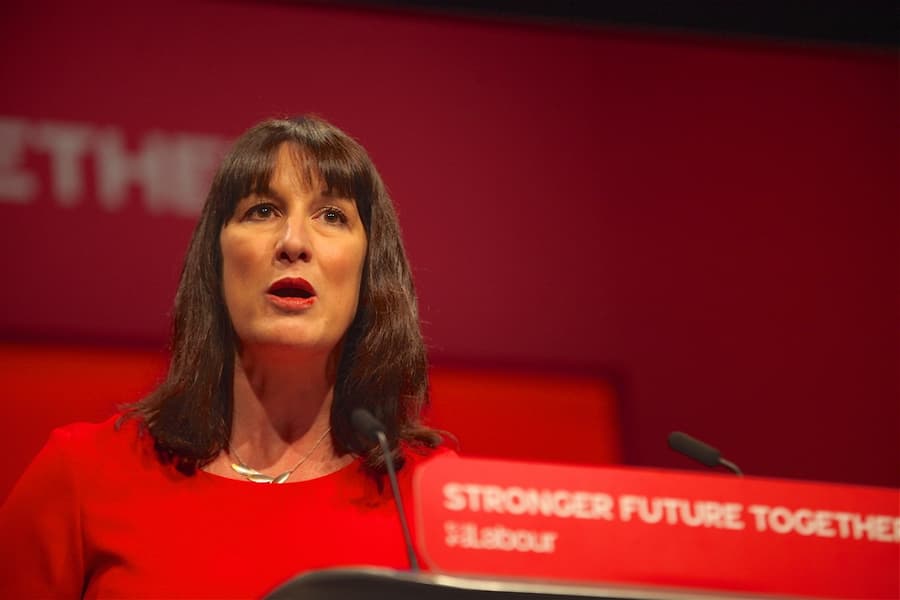

Chancellor Rachel Reeves could be left with little option but to seek alternative ways to raise much needed funds for the public purse if she is to stick to the Labour party’s promise not to raise National Insurance contributions, basic or higher rates of income tax, or VAT in the upcoming budget.
With a £20bn-£30bn hole in the public finances Reeves is expected to find ways to increase taxes, but has been warned it must come with reform of the tax system to avoid ‘directionless tinkering and half-baked fixes’ said Isaac Delestre, a Senior Research Economist at the Institute for Fiscal Studies (IFS).
A green paper published by the IFS suggests it is indeed possible for the chancellor to raise the funds, ‘but doing so would not be straightforward – not least because of serious constraints on the next four biggest taxes (corporation tax, council tax, business rates and fuel duties).’
The paper goes on to outline alternative options include increasing council tax rates, fuel duties, and higher tax rate on income from capital; but adds council tax rises of 4.3% are already factored in, raising rates on income from capital would discourage savings and investments.
An annual wealth tax, thought to be under consideration in the context of the non-dom regime, is ‘cautioned against’ as it would present huge practical challenges:
“…the more it was concentrated on the very wealthy, the more it would incentivise them to leave (or not come to) the UK. It would not be a well-targeted way to tax the large returns that wealth can generate and, as such, would be no substitute for well-functioning taxes on capital income and gains. If the Chancellor wants to raise more from the better-off, a better approach would be to fix existing wealth-related taxes.”
Inheritance Tax (IHT) and gifting also come under scrutiny in the report, suggesting the £9bn raised by IHT could be raise a further £0.3bn with an increase of one percentage point to 41%. The number of UK deaths subject to IHT, currently 6.2% in 2025-26, is projected to rise to 9.7% by 2029–30 say the Office for Budget Responsibility (OBR) which could result in an additional £6bn should the residence nil-rate band be abolished. It is already thought the government could introduce a cap of lifetime gifting, or possibly look at the taper rate. The number of years could be extended, suggest the IFS, or the chancellor could seek to tax gifts across people’s entire lives
The IFS also tackle stamp duty land tax (SDLT), describing the gradual increases (it is forecast to bring in £24.5bn in 2029–30) as ‘regrettable.’
“Taxing asset transactions impedes mutually beneficial exchanges. Instead of allowing assets to be sold to those who value them most, SDLT effectively throws sand in the gears, leading to an inefficient allocation of property.”
Indeed the IFS go as far as to say SDLT should be abolished as part of wholesale reform of property taxation.
“Council tax should be turned into a tax proportional to up-to-date property values, set at a rate that would replace the revenue from SDLT on housing as well as existing council tax revenue. The revenue from both business rates and SDLT on commercial property would then (ideally) come instead from a tax on the value of non-residential land (i.e. excluding the value of the buildings themselves, unlike business rates) – feasibility of accurate valuation permitting – so as not to discourage the development and use of property for business purposes.”
The upcoming budget presents challenges for a government who have committed to trying to keep money in people’s pockets. But, say the IFS, as a ‘bare minimum’ the chancellor should avoid exacerbating existing problems
“If she is not willing to replace them, the most damaging taxes should at the very least not be increased. Stamp duties and the insurance premium tax, both taxes to which cash-strapped Chancellors have turned in recent decades, would be particularly harmful choices and should be resisted. Restricting income tax relief on pensions is also unattractive and, for some, would seriously blunt incentives to save, while doing away with some of the more attractive features of the current system.”
“37p of every £1 earned in the UK is paid to the government in taxation. At such a scale, even relatively modest inefficiencies in tax design can translate into large costs for the economy as a whole; and the UK tax system’s deficiencies are not modest. Changing rates and thresholds is all very well, but unless the Chancellor is willing to pursue genuine reform it will be taxpayers that shoulder the cost of her neglect.”














One Response
Let’s hope we never get back to the position outlined in the Beatles’ song “I’m the taxman”.