

The will of a father who effectively disinherited two of his three children has successfully been challenged in court, after the circumstances surrounding its drafting and witnessing were considered “highly suspicious”.
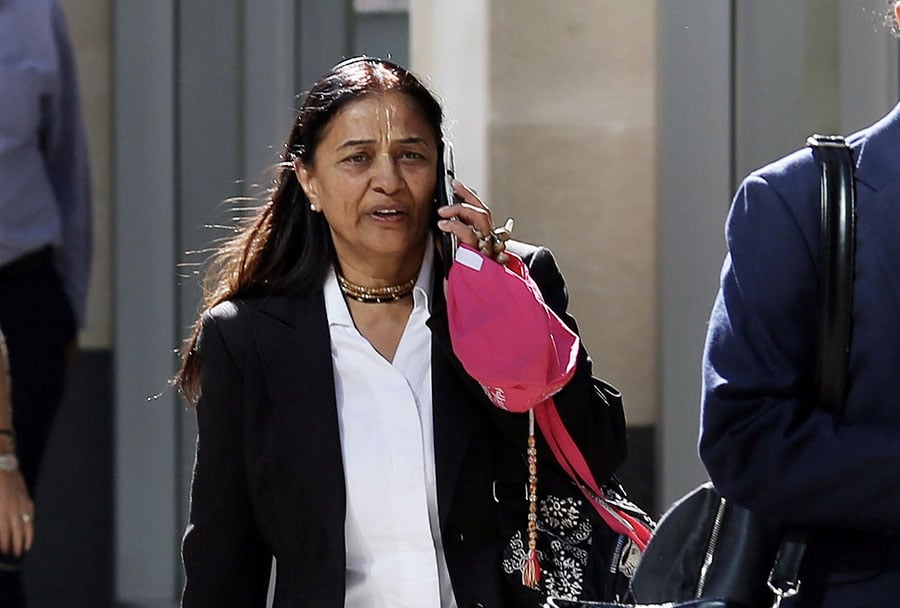
Laxmikant Patel died in October 2021, leaving an estate of around £600,000. Previous wills written in 2018 and 2019 split the inheritance roughly three ways between his children, Anju Patel (pictured), Piyush Patel and Bhavenetta Stewart-Brown.
The case centred on the drafting of a new will in 2021 which differed significantly from the previous wills, leaving the bulk of the estate to Anju, and £250 each to Piyush and Bhavenetta.
In court, barrister for Bhavanetta, Tim Sherwin, described the decision as “most odd” in view of the previous wills, saying there was a “cloud of suspicion” hanging over the way it was drawn up and executed. The timing of the will was also suspicious, Bhavenetta claimed, being drafted two months before Laxmikant’s death at a time when he was terminally ill, frail and in a hospital subject to Covid restrictions
Defending the claim, Anju said her father had complained his two other children had failed to show him “true affection” and, when asked to explain why he had left them anything at all, had replied: “…they have failed in their sense of duty, but as a father I have not forgotten them.”
He was also said to have labelled his son, Piyush, a “hugely controlling” figure, complained of Bhavenetta’s “bad temper” and said she had taken “massive advantage” of her elderly father.
Anju’s barrister, James Kane, argued that by October 2019 Laxmikant had formed a “sharply negative” view of both Piyush and Bhavenetta, citing his alleged comments to the will writer in 2019 that Bhavenetta “has taken massive advantage of her father” – while Anju remained “the only light in his life”.
“Apparently, she has a bad temper,” the will writer said of Bhavenetta.
Anju claimed her father gave instructions for the will to Vijaykant Patel – whom she knew from the Hare Krishna temple and claimed to be a friend of her father – and that Vijaykant came to visit his bed at London’s Northwick Hospital, where Laxmikant asked him to help prepare the will document.
Vijaykant, the executor of the 2021 will, claimed to have taken notes at the hospital meeting, with Laxmikant expressing “revulsion” towards Bhavenetta and Piyush before stating that the pair were “only after his property” and “everything goes to Anju”.
Finding that the 2021 hospital bed will had not been properly witnessed, the judge explained:
“Both witnesses said they used the same pen as the deceased, but it’s plain from the face of the will that it wasn’t signed by all the participating parties using the same pen.”
The judge also found that there was no compelling evidence that Laxmikant “knew and approved” of the 2021 will.
“The particular circumstances of the instructions and execution of the 2021 will are suspicious – highly suspicious,” he commented.
The 2021 document was a drastic change from previous even-handed wills drawn up by Laxmikant, said the judge, noting: “a particular feature was that it effectively disinherited two of his three children.”
“I have arrived at the clear conclusion that those propounding the 2021 will have not discharged the burden of establishing that he knew and approved its contents,” he added, before going on to strike out the 2021 will and reinstate Laxmikant’s previous 2019 will, leaving his three children sharing his fortune on roughly equal terms.
In challenging the will, Bhavenetta’s barrister said her sister had done what she could to distance her father from his faith, telling the judge:
“The evidence…shows a clear pattern of isolation and control over the deceased on the part of Anju and (her husband) which became especially stark when he was in the hospital at the end of his life – when, of course, the purported 2021 will was made.”
At a further hearing this week, the judge ordered that Anju and Vijaykant are each jointly liable to pay Bhavenetta’s costs of fighting the case, which Mr Sherwin said amounted to £380,000 with VAT to be added – taking the total bill to over £450,000, almost twice what Anju was set to receive under the 2019 will.
She will also have to pay her own lawyers, but no figures for her own bill emerged during the hearing.
Mr Kane asked the judge for permission to appeal against his ruling on Anju’s behalf, which was refused.
The judge also ordered an up-front payment on account of costs to be made of around £180,000 plus VAT.
The decision brings into focus the continued importance of “due execution and knowledge and approval,” said Kate Harris, partner in the private wealth disputes team at Birketts LLP.
“As probate litigators, we often see disputes arise not from the value of an estate, but from the circumstances in which a will is made,” she said.
“The Patel judgment highlights the court’s continued willingness to scrutinise wills executed when a testator is seriously ill, isolated, or reliant on others for support. When a will is prepared at a moment of acute vulnerability, the evidential burden on those seeking to uphold it becomes considerably heavier.”
The principles of execution and capacity remain “central battlegrounds in contentious probate.” she added.
“Any inconsistency in the witnessing process, lack of clarity about who prepared the document, or departure from long established testamentary patterns will invite judicial scepticism.
“The financial fallout in this case shows just how high the stakes can be. A dispute that starts over fairness or family tensions can quickly escalate into a costs burden far larger than the inheritance at issue particularly when parties underestimate the complexity and intensity of probate litigation.”













One Response
Are the judgements published anywhere? Is there a neutral citation for it?