
It’s not uncommon to come across a stamp album when sorting through belongings. Sometimes it’s tucked in a drawer, sometimes it takes up a shelf, but the main question is always the same: is it worth anything?
Valuable stamps can be very unassuming, so is always worth getting an expert opinion, which Swift Values can provide from photographs for just £50+VAT.
Here are five simple, reliable signs that a stamp collection might deserve a closer look.
-
Rarity
The most important factor in a stamp’s value is how rare it is. If thousands or millions were printed, it is unlikely to be worth much now. On the other hand, if only a small number were made, or if most were destroyed, lost or withdrawn, the value can rise significantly.
Stamps with printing errors, unusual colours or limited runs are especially sought after.
Fact: The most valuable stamp ever sold is the 1c magenta from British Guiana. Only one is known to exist. It last changed hands for nearly £6 million.
-
Condition
Collectors look for stamps that are clean, undamaged, and well centred. Tears, creases, heavy postmarks or missing perforations can all reduce value. If the stamp is unused, having the original gum intact also helps.
Albums stored in damp or humid conditions can cause fading or sticking, so how the collection has been kept matters too.
Fact: A loft or garage is the absolute worst place to store a stamp collection because of the effect damp conditions can have. The collectors know this but the loved ones they leave behind often don’t!
-
Age and historical significance
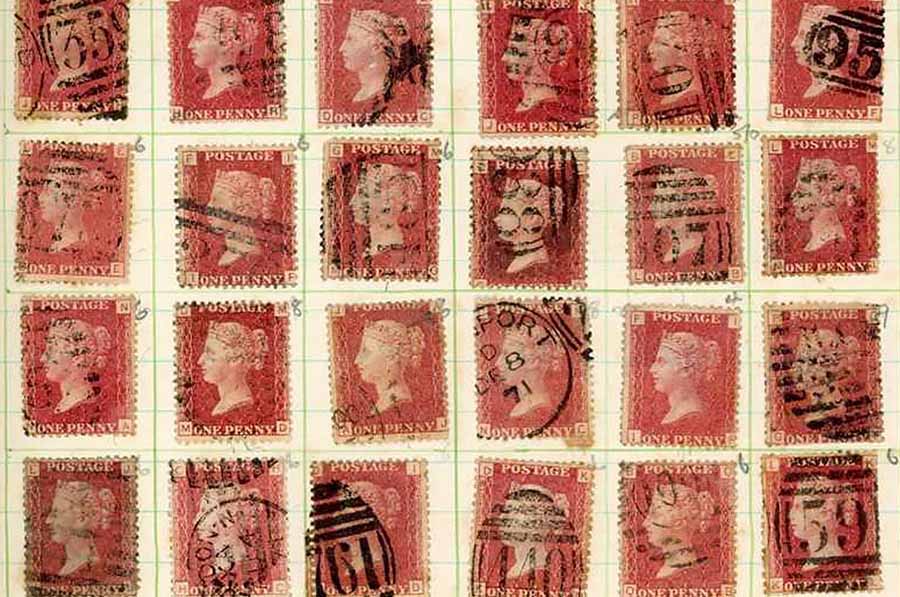
Older stamps often feel more valuable, but age alone isn’t a guarantee of value. Many Victorian-era stamps are surprisingly common. What matters more is whether the stamp marks an important moment in history or was part of an early or notable issue.
Collectors pay attention to stamps linked to major events, early postal systems, or the beginning of a monarch’s reign.
Fact: The Penny Black, issued in 1840, was the world’s first postage stamp. Millions were printed, so only well-preserved examples are worth significant sums.
-
Provenance
The story behind a stamp or collection can add to its appeal. If a collection was built by a serious collector or came from a notable estate it may carry more weight with buyers or valuers.
Even simple details such as careful organisation, typed labels or auction receipts can show that someone knew what they were doing.
Fact: Collections with a clear backstory or links to known collectors often sell for more than similar groups with no known history.
-
Completeness of sets
Stamps are often issued in sets, covering a range of values or designs. Collectors like to buy full sets, so a collection that includes all parts of a series is usually more valuable than one with gaps.
Missing just one stamp from an otherwise complete set can dramatically reduce the overall value. A set is worth much more than the sum of its parts.
Fact: The 1913 Seahorse stamps are some of the most sought-after British high values. The £1 green is the key value, and without it, the remaining stamps are worth only a fraction of a full set.
Getting a second opinion matters
Unlike most household chattels, stamp collections are almost impossible to assess accurately without specialist knowledge. Even an executor who sets aside days to research values online will struggle. For probate, that uncertainty can cause real problems.
The simplest solution is to have a collection checked by an expert. A professional valuation ensures nothing important is missed and gives executors a clear, defensible figure to rely on. If a stamp album turns up in an estate, Swift Values can review it within days from photographs alone.
This article was submitted by Swift Values as part of an advertising agreement with Today’s Wills and Probate. The views expressed in this article are those of the submitter and not those of Today’s Wills and Probate.