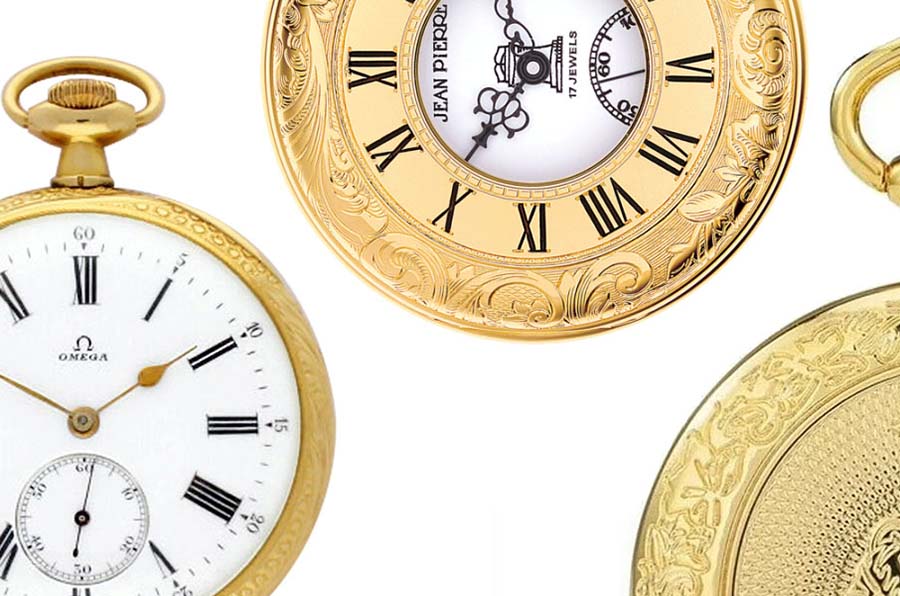

A British pocket watch made headlines this week after achieving a world-record £2.1 million at auction.
While few estate watches will reach seven figures, unusual mechanisms, rare makers and advanced complications can all have a dramatic impact on value and therefore solicitors and executors should always seek a professional valuation of these niche objects.
Below is a straightforward guide to some of the most important complications found on antique pocket watches and why their presence can materially influence value.
Chronograph
A chronograph is one of the more frequently encountered complications. It adds a stopwatch function to the watch, allowing the user to measure short periods of elapsed time. The mechanism can be simple – a single hand that starts and stops – or more elaborate, with multiple registers tracking seconds, minutes and sometimes hours.
Because basic chronographs were produced in relatively high numbers, the feature alone doesn’t make a watch especially valuable. However, more sophisticated multi-dial versions, particularly from respected makers, can attract strong prices.
Moon phase
A moon phase indicator shows the current phase of the moon through a small aperture or sub-dial. It is one of the oldest complications and originally served a very practical purpose for professions reliant on tides and lunar cycles, such as sailors and farmers.
Moon phase displays range from simple painted discs to finely detailed enamel work. The more decorative or technically refined the design, the more likely it is to contribute to the watch’s value. They are less common than chronographs, so good examples tend to be more collectible.
Perpetual calendar
The perpetual calendar is among the most complex systems fitted to pocket watches. It automatically adjusts the date for months of different lengths and even leap years, keeping the display accurate without manual intervention for decades at a time.
Its engineering represents a major achievement in miniature mechanical design, and early examples were produced in very limited numbers. As a result, pocket watches with perpetual calendars are prized by collectors and can command significant premiums.
Minute repeater
A minute repeater allows the time to be ‘heard’ rather than seen. When activated, the mechanism strikes a sequence of chimes that audibly indicate the hours, quarter-hours and minutes. Before widespread lighting, this was a genuinely practical feature.
The system relies on a delicate network of gongs, springs and hammers, all tuned by hand. Creating a repeater requires exceptional craftsmanship, making these watches both rare and highly desirable. Even non-working repeaters can be valuable because of the complexity of the mechanism.
Tourbillon
The tourbillon is one of the most celebrated innovations in horology. It places the escapement and balance wheel inside a rotating cage designed to offset the effects of gravity on timekeeping accuracy, which was particularly important for pocket watches as they were usually carried vertically.
Tourbillons were extremely difficult to produce, even for the greatest watchmakers of the 19th century, and surviving examples are scarce. Their combination of mechanical ingenuity and aesthetic beauty makes them some of the most valuable pocket watches on the market.
Dual time zone/GMT
A dual-time or GMT pocket watch can display two different time zones at once, usually by means of a secondary hour hand or a separate sub-dial. As international travel and trade expanded, this feature became increasingly useful for travellers, military officers and businessmen.
Although less intricate than perpetual calendars or tourbillons, GMT watches are not commonly encountered and offer strong appeal to collectors. They also provide a glimpse into a period when globalisation was accelerating and watchmakers were developing practical solutions for changing lifestyles.
Why accurate probate valuation matters
Pocket watches can be deceptive: a plain exterior may hide a rare or complex mechanism that materially affects value.
Swift Values works with experienced horology specialists who assess pocket watches for probate, whether from photographs or through detailed in-person valuation.
A proper valuation protects both executors and beneficiaries by ensuring these often-overlooked items are appraised correctly.
This article was submitted by Swift Values as part of their advertising agreement with Today’s Wills and Probate. The views expressed in this article are those of the submitter and not those of Today’s Wills and Probate.