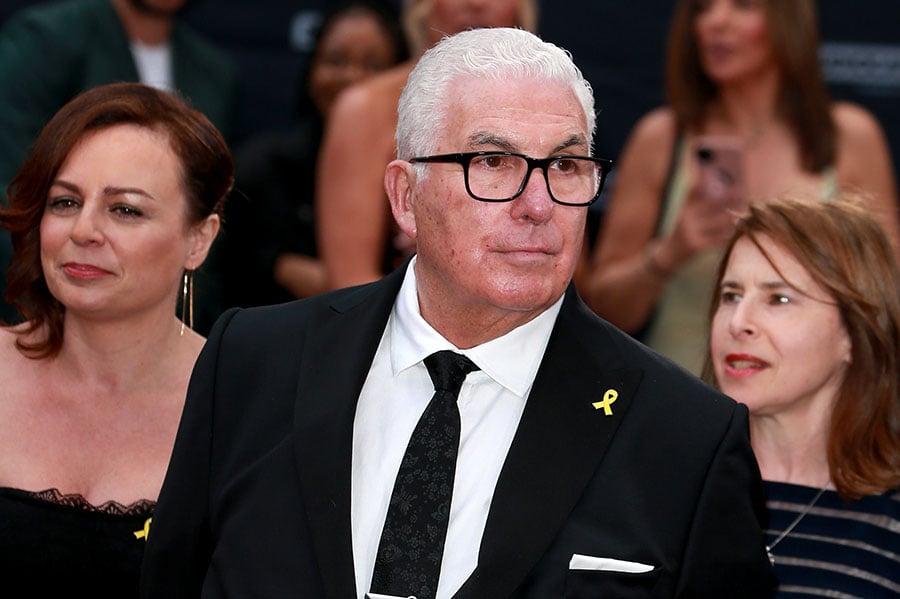
Today’s Wills and Probate sits down with Premier Solicitors’ Chief Revenue Officer David Masterton to discuss his time in the wills and probate sector. David shares his thoughts on the good, the bad and ugly of wills and probate; from dynasty to digitisation and everything in between.
Hi career has taken him from financial services through to legal where he now leads the firm’s national partnerships, acquisitions, and strategic development efforts, combining commercial acumen with collaborative leadership to raise industry standards.
The firm is now ranked second in the UK by probate application volume (MoJ 2025) processing thousands of Grant applications annually for nearly 1,000 partners nationwide. As a full service firm it can leverage its expertise across Conveyancing, Contentious Probate, Court of Protection, and all other legal disciplines/services.
David was born and still lives in the New Forest. He has 4 children, and 3 dogs. In his spare time, he enjoys running, going to the gym, cooking, reading, watching sport (especially Southampton FC), and talking about the benefits of veganism to anyone that will listen!
TWP: What was your career path to your current role?
DM: My career’s been quite the winding road! I started at NatWest but quickly discovered banking wasn’t my thing. So at 19, I jumped ship to become Abbey Life’s youngest ever financial advisor – which sounds impressive until you realise it was predominantly selling life insurance!
I spent the next 15 years in financial services, predominantly as an IFA at firms like BDO and St. James’s Place. After a while, I fancied a change of scenery.
That’s when I joined Chorus Law (Simplify) in 2012, looking after sales, marketing, and business development for six years. We had a good run and sold the business in 2018, which led me to Kings Court Trust as Chief Revenue Officer – essentially doing more of what I enjoyed for another four years.
I’m now enjoying my time at Premier Solicitors in the same role, with the added exposure and benefits of working for a full-service law firm brings to the table.
It’s been less of a master plan and more of following opportunities that felt right at the time!
TWP: Did you have any other career ambitions?
DM: I did consider joining the Navy, to follow my father’s early career. The closest I’ve come to that is going on a few cruises!
TWP: What keeps you motivated in your work?
DM: Loving what I do. I’ve always been outcome focussed, self-motivated, and results driven. I think if you truly love what you do and surround yourself with the right people, work is a pleasure. I’ve been very lucky in that regard throughout my career.
TWP: What has been the best development in wills and probate in the last 20 years?
For Wills, I’d argue that The Mental Capacity Act 2005 stands as the most significant will-related development in recent decades. Implemented in 2007, it introduced Statutory Wills, enabling the Court of Protection to create wills for those lacking mental capacity. It also established Lasting Powers of Attorney, allowing individuals to designate decision-makers for health, welfare, and financial matters before losing capacity, whilst creating vital protection frameworks for vulnerable people.
For probate, digitalisation has been transformative. The reformed digital probate service, launched in 2019, has received over 1 million applications and revolutionised probate administration through 24/7 accessibility, real-time tracking, and home-based digital statements of truth. This eliminated registry office visits and inconvenient in-person oaths, improving efficiency particularly during the pandemic.
The system’s benefits extend beyond convenience: it has eliminated over 25 million pieces of paper, improved legacy information flow to charities, and achieved 59% user adoption of the Ministry of Justice’s online portal.
Despite facing significant backlogs between 2019-2023, performance has markedly improved, with backlogs halving over the past year and grants now exceeding applications for over 18 months.
While less dramatic than potential future reforms like electronic wills, this digital transformation has delivered immediate, tangible benefits to over a million people during difficult times.
TWP: And the worst?
DM: Contrarywise, The UK probate registry’s digitisation and centralisation reform, begun around 2019-2020, stands as arguably the worst development in wills and probate over two decades.
Critical implementation failures included launching a ‘minimal viable product’ unable to handle all application types, creating severe bottlenecks. The transition to centralised digital systems prompted mass staff departures, whilst inadequate training left remaining employees struggling.
The consequences were devastating. Cases exceeding one year rose 134% between 2020-2023. Average processing times jumped from 2-3 weeks to 10.8 weeks (online) and 16.4 weeks (paper), with pandemic peaks reaching six months.
Professionally, 94% of practitioners reported reputational damage from public misunderstanding, whilst cancelled house sales became universal, causing financial hardship for bereaved families already under emotional strain.
The reform’s timing proved catastrophic – COVID-19 struck whilst the system remained nascent, exponentially compounding existing problems.
TWP: What has your recent awards success meant for you personally, and the business?
DM:
Personal and Team Impact:
We’re incredibly proud and honoured to receive the recognition. The awards are testament to the hard work, dedication, and expertise of our entire team at Premier Solicitors.
Business Impact:
The awards mean significant recognition for the business in several ways:
Validation of expertise – The awards reflect the firm’s unwavering commitment to providing exceptional service to our clients during some of the most sensitive times in their lives.
Market positioning – Recognition “highlights Premier Solicitors’ position as a leading provider of probate services.
Demonstration of strength – The awards underscore the strength of Premier Solicitors’ operational services.
Collaborative achievement – Such achievements are made possible through collaborative effort and the trust placed in the firm by those it serves.
TWP: What’s the best piece of advice anyone ever gave you regarding your career?
DM:
“Build skills that compound.”
What they meant by that is:
Early in your career, prioritise learning and skill development over titles or marginal salary differences. Choose roles where you’ll grow rapidly, work with talented people, and gain skills that stack on each other over time.
A skill you develop today doesn’t just help you now – it becomes the foundation for the next skill, which builds on the previous one. Five years of deliberate skill-building creates exponential returns, not linear ones.
This often means:
- Taking the harder project that scares you a bit
- Working somewhere you’ll be challenged and mentored, even if it pays less initially
- Saying yes to opportunities slightly beyond your current abilities
- Building things, not just consuming information about building things
Your career is long. The question isn’t “what will I earn this year?” but “who will I become over the next five years, and what will that person be capable of?”
TWP: What’s the best piece of advice you’d like to give to someone just starting out?
For a new role in sales and marketing, or when stepping up to a managerial/Director/C Suite role, I believe the following is still as relevant:
Master listening, not just talking. The best salespeople/managers ask thoughtful questions and genuinely understand customer needs. People want their problems solved, not to be sold to.
Embrace rejection. In sales, you’ll hear “no” far more than “yes.” Each rejection is just data teaching you about your approach. Successful professionals see it as part of the process, not personal failure.
Build relationships, not just transactions. Prioritise helping people and building trust over short-term quotas. Your reputation and network will sustain your entire career.
Get comfortable with data. Learn your numbers/KPI’s/CRM, understand conversion rates, and know which activities drive results. Modern sales and marketing are data driven.
Never stop learning. Shadow top performers, find mentors, and study the books. There are thousands of sales/marketing/management books but a more generic good one I would recommend to anyone is “Black Box Thinking” by Matthew Syed. The best skills are learnable – you’re not born with them.
Today’s Wills and Probate was talking to David Masterton