


The High Court has refused permission to appeal a ruling that declarations of trust made by a multi-millionaire accountant in favour of his wife must be set aside.
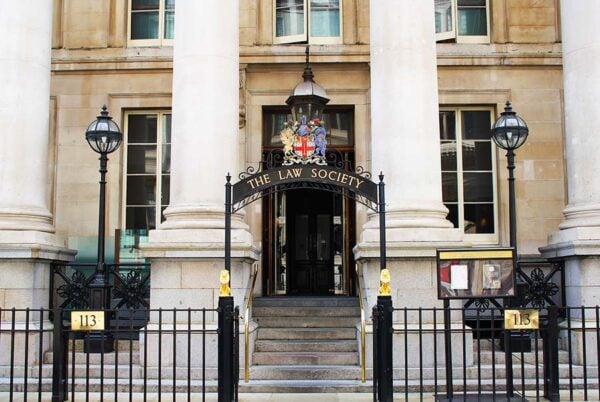
Mr Justice Richards said the application from tax specialist John Dixon (pictured) had no “sufficiently real prospect of success” and allowed an application for possession and sale of Dixon’s home to settle significant debts.
Dixon, a tax specialist and former partner at Ernst & Young, executed a series of declarations of trust in favour of his wife in 2010.
The declarations “purported to divest himself of all present and future assets in favour of his wife,” handing her ownership of valuable properties, cars and all his future income, leaving him financially dependent on his wife.
Having signed the documents, Dixon remained as managing partner and UK head of tax at E&Y for the next four years, earning £2 million a year.
In 2015, HMRC served a demand for £627,302. In his response, Dixon claimed his assets were “nil,” the declarations of trust having beneficially transferred “all his assets and future income” to his wife.
However, he was made bankrupt over the unpaid debt in 2017 and only discharged this year.
At a High Court hearing last year, bankruptcy trustees Emma Sayers and Jeremy Willmont argued the 2010 trust declarations were attempts to place his assets beyond the reach of future creditors.
Defending the claim himself, Dixon argued he had no such intention and the trusts were created as part of inheritance tax planning and due to economic fears.
Giving judgment, Judge Barber said she was satisfied he had entered into the declarations for “no consideration” and for the “purpose of putting assets beyond the reach of a person who may at some time make a claim against him or of otherwise prejudicing the interests of a person in relation to the claim which he may make.”
She ordered that the declarations be set aside, allowing the trustees to pursue his assets to settle the debts.
Last week, Dixon returned to court and argued he should be given permission to appeal the judge’s order on the basis that what happened was “unfair”.
Representing himself before Mr Justice Richards, he said the case was “of critical importance” to him and his wife, adding: “We are facing an application by the claimants for possession and sale of our home. It’s not a happy situation to be in.”
As the couple’s assets had been frozen, Dixon said, they have been limited to their state pensions and so could not get legal representation.
Complaining at having had to argue his own case against a team of top lawyers last year, he said: “We basically were sort of mugged over three days. I find it very difficult to manage that sort of situation.”
Dixon put forward a range of procedural grounds of appeal and challenged the judge’s factual finding that his purpose in signing the trusts was to put his assets beyond the reach of any future creditors.
Pointing out there was no HMRC debt at the time the trusts were established, he said there was “no evidence” of “any intention to transfer assets away from creditors”.
He asked the court: “Do you really think that I would jeopardise a career of so many years – I was in Number 10 Downing Street 20 times – over just over £500,000 worth of penalties and interest when I was earning £2m a year?
“It’s inconceivable that I would have done that. The reality is – now and for many many years – that I have been totally reliant on [my wife] for financial support.”
Giving judgment on his application for permission to appeal, Mr Justice Richards said Judge Barber had found as a fact that the declarations of trusts were intended as a way of “defrauding creditors.”
“There were matters for the judge to weigh in the balance,” he said.
“The fact he considers a different conclusion was available doesn’t approach the threshold for a realistic challenge to findings of fact.”
Although acknowledging that the case is an “important matter” for Mr Dixon, he concluded: “I have reached the very clear conclusion that there isn’t an appeal here with sufficiently realistic prospects of success.”
The appeal bid was refused, with the trustees’ application for possession and sale of the couple’s home set to go ahead at a later date.
Image courtesy of Champion News














One Response
If the “managing partner and UK head of tax at E&Y” can get his tax affairs wrong, what chance have the rest of us?!?