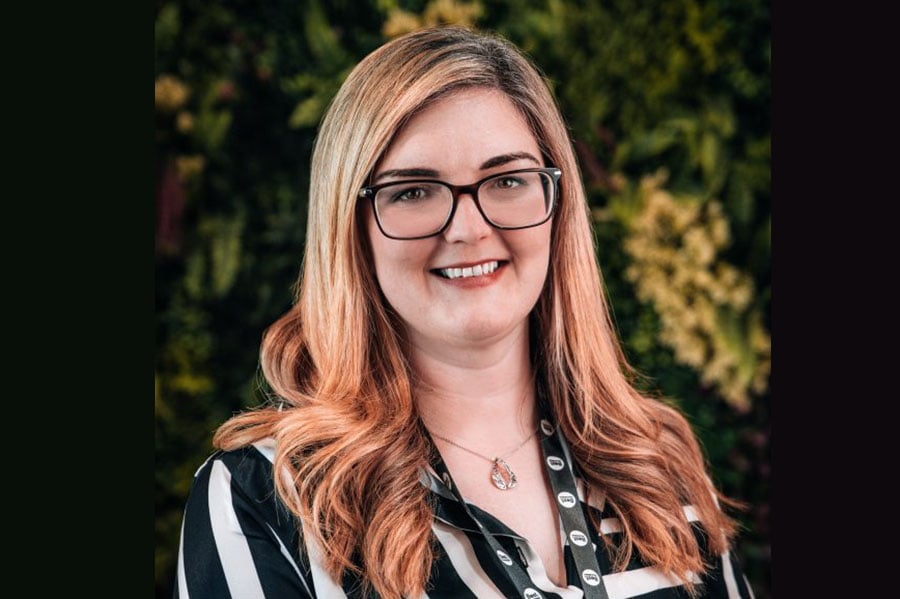
Geoff Kertesz is a partner in the trust and probate litigation team at Stewarts, specialising in complex trust and estate disputes, often with an offshore element. He acts in both domestic and international matters, with experience spanning the UK, US, Bermuda, Channel Islands, Cayman Islands, BVI and Hong Kong. Qualified in California as well as England and Wales, Geoff also acts as a trustee, giving him first-hand insight into the issues facing both trusts and trustees. He has also been appointed as an expert witness in the High Court of England and Wales on cross-border litigation matters.
Family fallout over assets can be inevitable. Whether the fight is over a will, a trust, a deed, or even the unspoken family agreement “that everyone knew was the case”, families can and do fall out.
These battles can play out after death or even during life, and the form they take sometimes depends on the precise assets at stake. The family home often brings with it an increased sense of emotional attachment and, in turn, a higher temperature when it comes to disagreements over what to do with it. Chattels, even (and often particularly) those worth nothing on the open market, fuel a disproportionate number of disputes.
But houses, share portfolios, and vases are all very 2008. Now there is an entirely new category of assets: cryptoassets. These pose a different challenge. They do not necessarily create new reasons for families to fall out, but they can make existing disputes harder to resolve, with assets difficult to identify, access, or locate in comparison to traditional assets. As ownership of digital assets grows, these difficulties are increasingly likely to emerge within inheritance disputes.
Access denied
Disputes in estates over access to electronic information are nothing new. For example, access to email and social media accounts has sparked a number of disputes. Now that the majority of banking is done online, there are difficulties relating to passwords.
Cryptoassets are the next iteration of this problem, just with an added technical layer. On the assumption that your author is not alone in not fully understanding how cryptoassets work, it is fair to say that the added technical difficulties of accessing these assets are going to provide even more grounds for dispute.
Put simply, it is much more complicated to gain access to a crypto wallet than it is to an online current account. What starts as a practical problem of accessing an asset can quickly become entangled with wider family fallout and ultimately lead to a dispute.
Are you the keymaster?
Another problem is ownership. English courts tend to consider that whoever controls the private key to a cryptoasset owns that cryptoasset. This is a helpful starting position, but things then get far more complicated.
One of the biggest problems is situs. Unlike a vase, cryptoassets do not have a physical location. This in turn creates uncertainty when it comes to succession, conflicts of laws, and tax. HMRC treats situs as following the beneficial owner’s residence, while STEP supports the view that situs should follow the location of the person who controls the private key. There seems to be more logic to STEP’s position as it goes to control rather than residence, but time will tell which view prevails.
Dude, where’s my crypto?
There is also more chance of a cryptoasset getting lost during the course of an estate administration. Too often, in a “traditional” estate administration, beneficiaries contend that movable assets have gone missing. The chances of this happening with a cryptoasset are far higher because control depends on the private key or recovery credentials. Without those, the cryptoasset is lost. This is not the case with a current account, where an executor can contact the bank, which can then comply with a court order.
If someone has moved the cryptoasset, crypto transactions are usually irreversible, which in turn makes tracing and recovery more complex. Again, it may be logistically impossible to comply with a court order declaring that cryptoassets form part of an estate or trust if no one can find the key or credentials.
Some people even programme cryptoassets so that they are transferred immediately following a specified event, such as prolonged inactivity or death. This could create headaches for executors far beyond those posed by jointly held assets that pass immediately upon death. Are these lifetime transactions or testamentary acts? Does the Wills Act 1837 apply?
Courts and legislators have yet to provide clear answers, although this is understandable given that these issues need time to trickle down through estate administrations, litigation, and ultimately reported judgments.
Don’t tiptoe around crypto
Cryptoassets do not sit neatly with traditional doctrines relating to estate administration. Testators, settlors, and professionals need to think about the issues posed by cryptoassets and address them head-on rather than assume they will be dealt with like more traditional assets. Early planning and communication are key because these assets are inherently more difficult to deal with after death.
Cryptoassets may be new, but the underlying issue is a familiar one. It is not that cryptoassets will in themselves create disputes, but rather that the practical and legal difficulties cryptoassets pose will become intertwined with existing family hostility. Issues relating to identification and access to valuable cryptoassets are, unfortunately, unlikely to defuse family disputes; the uncertainty surrounding these assets is more likely to exacerbate any existing tensions.
About the author
 Geoff Kertesz is a partner in the trust and probate litigation team at Stewarts, specialising in complex trust and estate disputes, often with an offshore element. He acts in both domestic and international matters, with experience spanning the UK, US, Bermuda, Channel Islands, Cayman Islands, BVI and Hong Kong. Qualified in California as well as England and Wales, Geoff also acts as a trustee, giving him first-hand insight into the issues facing both trusts and trustees. He has also been appointed as an expert witness in the High Court of England and Wales on cross-border litigation matters.