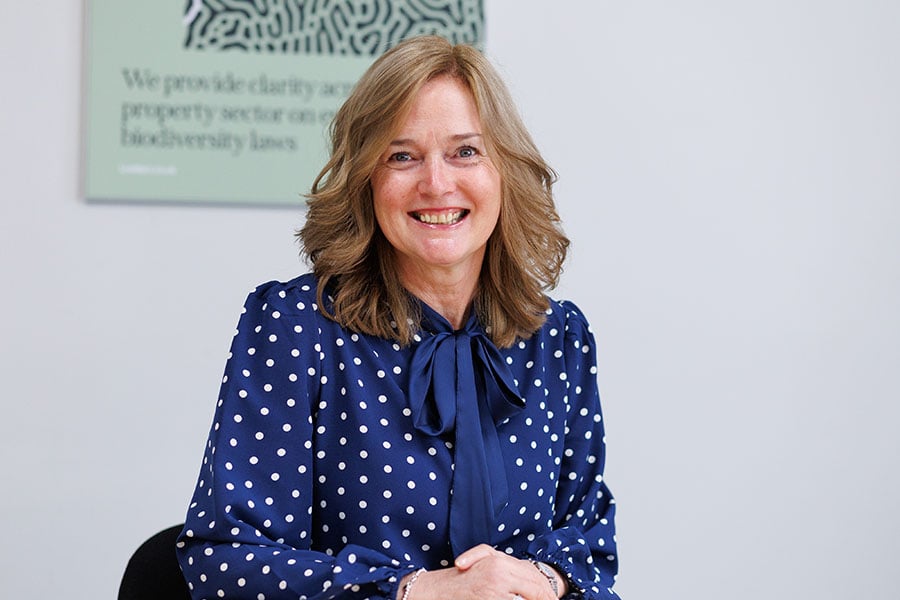

Michelle Gavin is a partner in the private client team at Lodders and specialises in all aspects of wills, succession and estate planning and complex estate administration. She is one of a small number of recognised practitioners in the region ranked as a leading lawyer in the Chambers and Partners High Net Worth Guide and is mentioned in the Legal 500 Directory, having received excellent feedback from clients and referrers.
What was your career path to your current role?
I always wanted to be a solicitor. As a teenager I followed the Birmingham Six miscarriage of justice case, which sparked my interest in the law and in helping people navigate difficult situations. I studied Law at Coventry University, graduating with a 2:1 honours degree and receiving the Sweet & Maxwell Prize for best student. I then completed my Postgraduate Diploma in Legal Studies at Birmingham University, achieving a distinction.
I qualified as a solicitor in 2002 and have specialised exclusively in private client work throughout my career. I have worked in high street practice, a large Birmingham firm and later headed a wills, trusts and probate department before joining Lodders in November 2024 as a partner in the private client team.
More than 20 years later, I still enjoy helping individuals and families plan for the future, protect family wealth and navigate some of life’s most challenging events. Today, I advise individuals, families, business owners, trustees and personal representatives on succession planning, wills, trusts, lasting powers of attorney and complex estate administration matters.
I’m a full member of STEP and an accredited member of the association of lifetime lawyers. I have been recognised in the Chambers high net worth guide since 2019 and am also recommended in The Legal 500, achievements of which I am particularly proud because they are based on feedback from clients, professional contacts and peers.
Did you have any other career ambitions?
Not really. I was unusually single-minded from a young age and always wanted to become a solicitor. What attracted me was the opportunity to help people solve problems and guide them through important decisions. More than 20 years into my career, that remains the part of the profession I enjoy most.
What keeps you motivated in your work?
The people. Every client has a different story, different priorities and different concerns. No two families are the same, which means no two matters are ever quite the same.
I particularly enjoy helping clients get their affairs into good order and giving them peace of mind. Whether it is preparing a will, putting a succession plan in place for a family business or guiding executors through a challenging estate administration, it is rewarding to know that good advice can make a real difference at what is often a difficult time in someone’s life.
I’m also motivated by helping colleagues and the next generation of lawyers develop. Sharing knowledge, mentoring junior lawyers and finding better ways of working benefits both our teams and our clients.
What has been the best development in wills and probate in the last 20 years?
The increased use of technology. The legal principles have not changed as dramatically as many people might think, but technology has transformed how we work and communicate with clients. Digital identification checks, online probate applications, virtual meetings and collaborative technology have all helped make legal services more accessible and efficient.
Technology has also enabled lawyers to spend less time on administration and more time advising clients. I am always looking for ways to embrace technology and improve efficiency, whether through digital onboarding, online probate applications, AI assisted drafting tools or better collaboration software. Used properly, technology allows lawyers to focus on what matters most: delivering excellent advice and support to clients.
If you could bring in one new piece of legislation for the sector, what would it be and why?
I would introduce legislation requiring individuals to receive prompts to review their wills following significant life events such as marriage, divorce, the birth of children or grandchildren, or the death of a spouse. Many disputes arise not because people fail to make a will, but because they fail to update one. A simple review mechanism could significantly reduce family disputes and help ensure estates pass in accordance with current wishes.
What’s the best piece of advice anyone ever gave you regarding your career?
Never stop learning. Private client law touches on tax, property, business succession, family dynamics and capacity issues, so there is always something new to learn. The lawyers who continue to develop their knowledge throughout their careers are usually the ones who provide the best advice to clients.
I would add a second piece of advice: build relationships, not transactions. Long-term professional relationships are one of the most rewarding aspects of this profession.
What advice would you like to give to someone just starting out?
Be curious and ask questions. Take every opportunity to learn from experienced colleagues and never be afraid to admit that you do not know something. The best lawyers are not the ones who claim to know all the answers, they are the ones who know how to find the right answer.
I would also encourage junior lawyers to develop their communication skills. Technical knowledge is important, but the ability to explain complex issues clearly and compassionately is what clients remember.
What piece of legislation would you take off the statute books and why?
I would abolish the residence nil rate band. It is one of the most complicated reliefs that private client practitioners have to explain and many clients struggle to understand why some families qualify while others do not.
Rather than introducing an additional layer of complexity, I believe it would have been better to increase the standard nil rate band from £325,000 to £500,000 for everyone. The £325,000 threshold has remained unchanged since 2009 and a straightforward increase would have been both simpler and fairer.
Good tax legislation should be easy for the public to understand. Despite years of use, the residence nil rate band remains one of the most misunderstood aspects of inheritance tax planning.
Tell us something people may be surprised to know about you…
Outside work I enjoy travelling and have a habit of saying ‘yes’ to experiences that push me outside my comfort zone. Over the years I’ve climbed Sydney Harbour Bridge, snorkelled in the Great Barrier Reef, undertaken a tandem skydive, swum with dolphins and even abseiled down the Wesleyan Building in Birmingham for charity.
People often see private client lawyers as cautious and risk averse, but many of us are far more adventurous outside the office than people might expect. I certainly seem to have developed a habit of saying “yes” before fully thinking through the consequences!
If you’d like to appear in a profile, email press@todayswillsandprobate.co.uk with ‘Profile’ in the subject line.