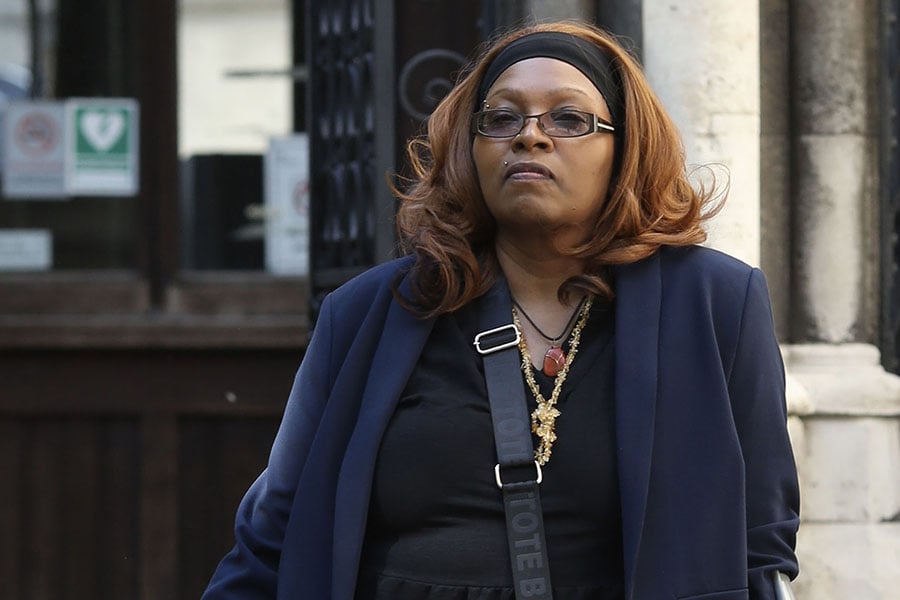

A failed inheritance dispute has resulted in a costs order for £126,000 after an “estranged” daughter unsuccessfully sued for a share of her late father’s estate.
Sarah Ducent’s father Herbert Ducent died in 2007, leaving his UK estate worth around £900,000 and a business and property in Jamaica, to his widow Dorothy, in a will drawn up in Jamaica.
Last year, Sarah – who shared her father with at least five half-siblings, including British-Jamaican vocalist Rickardo ‘Rik Rok’ Ducent, who co-wrote and sang on Shaggy’s 2001 hit ‘It Wasn’t Me’ – went to court in a bid to secure “reasonable provision” from her father’s estate, claiming she is now living “on the breadline”.
To claim part of her father’s fortune in the British courts, Sarah had to establish that Herbert’s legal permanent home was in London, rather than Jamaica.
In deciding whether English courts had jurisdiction to deal with the claim, Judge Jane Evans-Gordon found that after marrying Dorothy, Herbert also fathered a second child with a Jamaican woman in 1978 and went on to father at least three more with other women in Jamaica.
Herbert had moved the family to Jamaica in 1983, with Dorothy moving back to London in 1996, after which Herbert never visited England again.
Dismissing Sarah’s claim at Central London County Court last year, the judge concluded: “I am satisfied that Herbert was domiciled in Jamaica at his date of death.”
In court again last week, Sarah challenged the making of the costs order, under which she has to pay £126,000 to cover Dorothy’s legal bills, describing the sum as “excessive.”
But lawyers for Dorothy, defending the issuing of the “default costs certificate” against Sarah, highlighted her past non-compliance with court orders, including a previous order that she pay £40,000 towards Dorothy’s legal fees which had not materialised.
Ruling against Sarah for the second time, Judge Evans-Gordon agreed Sarah “just doesn’t have that sort of money” but said the amount ordered was not over the top.
“I am not going to set aside the default costs’ certificate, I am not satisfied that £126,000 for a dispute of this nature is plainly disproportionate,” she said.
“There was a three-day trial and there have been a number of hearings. It was also an international case in the sense that it involved witnesses from overseas.
“The deceased had been domiciled and resident in Jamaica for many years and much of the evidence had to come from there.”
At least one witness had to give video evidence from Jamaica, said the judge, adding that Dorothy’s son, Rik, also had to “fly in” to give evidence.
“I cannot say that £126,000 is disproportionate in all the circumstances,” said the judge, adding: “I see a great many costs orders, some of which are positively eye-watering, and I’m afraid that this is not such a figure.
“Her inability to pay is irrelevant to the question whether this costs order should be made.”
Sarah, who said she is now living in poverty in London, said outside court (pictured): “I am hurt by the whole thing and I’ve lost my whole family. My dad died, but on the day he died I didn’t think I would end up being in the position I am today, going through all this heartache.
“I don’t have a step-mother anymore. This money would make a great difference in my life, I am on the breadline right now.”
Kate Harris, partner in the private wealth disputes team at Birketts LLP, said the case is a stark reminder of the cost of inheritance disputes – particularly where cross-border issues are at play.
“A six‑figure costs order of £126,000 will shock many, but from a legal perspective it is not unusual in litigation of this complexity,” she explained.
“Multiple hearings, a full trial, international evidence, and specialist legal teams on both sides can quickly escalate costs to this level or beyond. For potential claimants under the Inheritance (Provision for Family and Dependants) Act 1975, there are several important lessons.
“First, jurisdiction is fundamental. Before engaging in costly proceedings, a claimant must be confident that the English court has the power to hear the claim. In this case, the central issue of domicile ultimately determined the outcome. If that question is not resolved in your favour, the claim will fail regardless of financial need.
“Second, litigation carries significant costs risk. The general rule remains that the losing party pays the winner’s costs. While the court retains discretion, it will rarely depart from that principle without good reason. Importantly, as this judgment reinforces, a party’s inability to pay is not a basis for avoiding a costs order.
“This said, the risk of the losing party being unable to meet a costs order cannot be ignored and should be factored in before costly claims are pursued. All parties must therefore approach these cases with a clear-eyed assessment of the downside risk, not just the potential recovery.
“Third, early evaluation and alternative resolution are critical. Claims under the 1975 Act are often emotionally charged and factually complex, particularly in blended families. However, mediation or negotiated settlement can often achieve a commercial resolution at a fraction of the cost of a fully contested trial. Once proceedings become entrenched, costs tend to escalate rapidly and disproportionately.
“Finally, this case highlights the importance of clear estate planning. Where families span multiple jurisdictions or involve multiple relationships, careful structuring of wills and consideration of domicile can significantly reduce the scope for disputes after death.
“In short, while the 1975 Act provides an important safety net for those left without reasonable financial provision, it is not a low-risk route to recovery. Potential claimants must weigh not only the merits of their case, but also the procedural hurdles and the very real possibility of substantial adverse costs if the claim fails.”
Image courtesy of Champion News