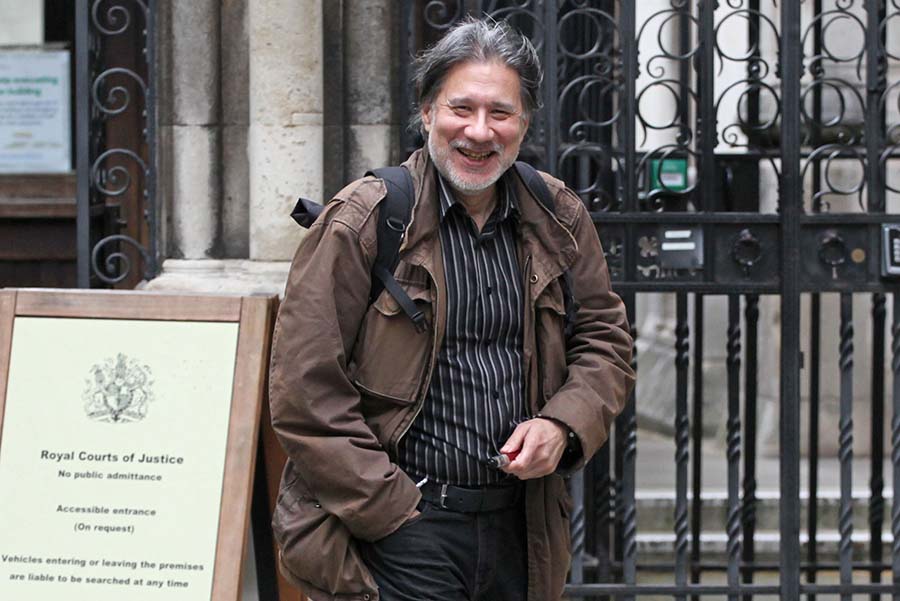

A County Court inheritance dispute has left a son with a £265,000 legal bill and eviction from his parents’ property.
Central London County Court dismissed Robert Chung’s bid to take sole ownership of his late parents’ £600,000 estate after he claimed he had been promised the house in recognition of his role in caring for his parents in later life.
The case arose following the death of Irene Chung in 2016, who died intestate. The estate, primarily the three-bedroom family home, was to be divided equally among her three children: Robert, Marina Bennett, and Richard Chung.
But Robert Chung initiated proprietary estoppel proceedings arguing that he alone was entitled to the property after claiming he was promised the house after he had returned to live with his parents in 1990 to care for them at their request.
The court heard that Chung’s father, who died in 1998, had left his estate entirely to his wife. No documentary evidence supported claims of a promise to transfer the home to Robert, and the judge found no credible basis for asserting that either parent intended to disinherit the other children.
Recorder McDonald delivered particularly strong criticism of Robert Chung’s evidence, describing aspects of his account as fabricated. He concluded that assertions regarding statements made by both parents were “inherently implausible” and unsupported by contemporaneous documents.
A central pillar of Chung’s argument was that he had sacrificed personal independence to care for his parents. However, the court found little to substantiate the claim.
Evidence presented by the defendant siblings suggested that neither parent required extensive care and that, in reality, Irene Chung largely maintained the household.
Witness accounts, including from Marina Bennett, described a situation in which Robert contributed minimally to domestic responsibilities. The judge was similarly critical, noting that occasional financial contributions or basic assistance such as meal preparation did not equate to meaningful caregiving.
The court concluded that Chung had not demonstrated either significant reliance or detriment. In dismissing the claim, the court ordered Chung to vacate the property within 28 days and imposed substantial costs.
The case had been ongoing for more than eight years, significantly diminishing the estate’s value. Recorder McDonald said had the estate been distributed without litigation, each sibling would have received an equal share. Chung had been offered a settlement that would have granted him a 62.5% share of the property’s value. Instead, the claimant’s pursuit of sole ownership likely exhausted his entitlement through legal costs and occupation charges.
The £265,000 liability includes contributions to the legal fees of the defendants and estate administrator, as well as “mesne profits” representing compensation for his occupation of the property after disputes arose.
In concluding, Recorder McDonald described the case as a “tragedy,” emphasising that the parents’ principal asset, intended to benefit all three children, had instead become the subject of costly litigation.