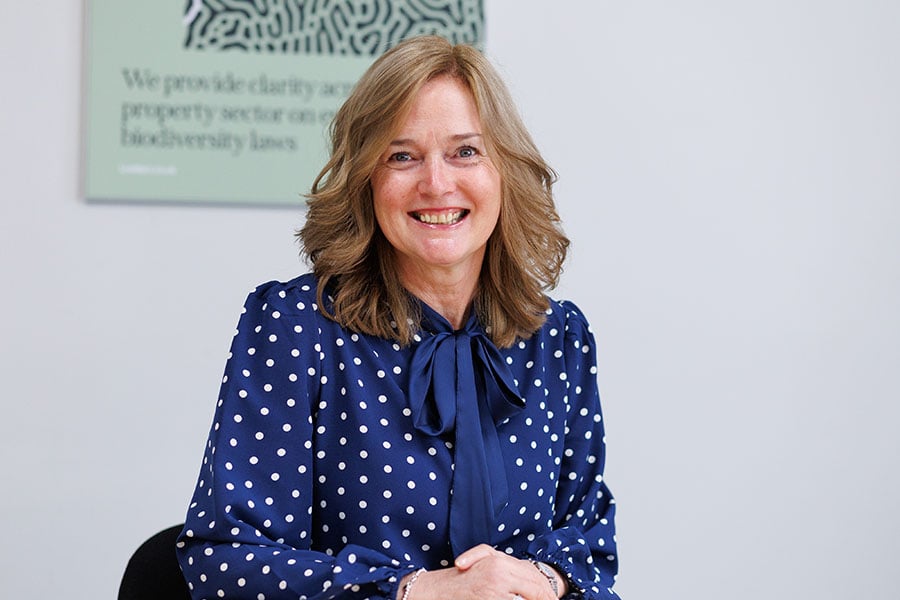

Kieran Osborne is founder and managing director of Squiggle Consult, an award-winning, B Corp-certified estate planning firm operating nationwide. After being made redundant from Lloyds Bank in 2017, he built Squiggle from his kitchen table into a national consultancy serving thousands of clients and supporting dozens of charities through ethical free will partnerships. He is also founder of YEPP, a LegalTech platform built by estate planners for estate planners, and Squiggle Academy, which trains the next generation of ethical practitioners. A Probate Industry Awards ‘Rising Star’ winner and Legal Growth CSR Award winner, Kieran is a sought-after speaker on modernising estate planning, ethical free will campaigns and raising standards across the sector.
What was your career path to your current role?
I came at estate planning sideways – which I think is the best way to come at it. I spent the first part of my career at Lloyds Bank as a business relationship manager, working with small business owners and learning – more than anything – how to listen. In 2017, I was made redundant and was almost immediately headhunted by an accountancy firm to set up the legal arm of their practice.
That was the spark. I saw a sector full of people doing the right thing but wrapped in jargon, intimidating clients into silence. So in June 2017, I founded Squiggle with the goal of stripping all of that away. Eight years on, Squiggle is a certified B Corp, operates nationwide, and I am still, very happily, just a man who learned to listen.
Did you have any other career ambitions?
If you had asked me at 16, estate planning would not have been on the list – I don’t think many teenagers list drafting wills alongside ambitions to be a footballer or astronaut. The honest answer is that I always wanted to build something. I was drawn to business, to the idea of creating an organisation that ran on your own values rather than someone else’s targets. Banking gave me the commercial instincts and exposure to family businesses; estate planning gave me the purpose. Now I get both.
Beyond Squiggle I have poured that ‘build something’ instinct into YEPP, our LegalTech business, and Squiggle Academy, where we train new consultants. So I suppose my career ambition has just been to keep starting things – I don’t think that itch ever really goes away.
What keeps you motivated in your work?
Three things, in this order. People – clients trust us with their final wishes, their families, sometimes their hardest moments. There is no version of that work that becomes routine. Standards – will-writing is still largely unregulated, the bar to call yourself an estate planner is far too low, and that drives me every day to push for better training, better ethics and better client outcomes. And impact – we became a B Corp because I genuinely believe business can be a force for good.
Through Squiggle Giving and our ethical free will partnerships with charities like Kent Association for the Blind, ellenor and the Dementia Experience, we have helped families plan their futures while supporting causes that matter. When you can do good work and do good at the same time, motivation looks after itself.
What has been the best development in wills and probate in the last 20 years?
The professionalisation of the sector – or at least the start of it. Twenty years ago, the public was largely choosing between a high street solicitor and the back of an envelope. The growth of dedicated estate planning firms, the rise of bodies like the Society of Will Writers, STEP, the BEST Foundation and CILEX, and the recent appetite for proper regulation have all moved the dial. We have also seen the emergence of LegalTech that, when used well, can genuinely improve client experience rather than replace human advice.
The clients I see today expect transparency on fees, ethical referral practices and proper safeguards. That is a huge cultural shift and, for an industry rooted in a 19th-century statute, it is overdue.
And the worst?
The unregulated will-writing market. It is frankly remarkable that anyone can hang a sign over the door tomorrow and call themselves an estate planner, with no qualifications, no oversight, no compulsory insurance and no real accountability when it goes wrong.
We see the consequences in our office every week – wills drafted with no understanding of the testator’s wider position, trusts mis-sold to people who did not need them, and families left to pick up the pieces years later. A close runner-up is the rise of free will mills that are not really free – the loss-leader is paid for somewhere, usually in poor advice or an aggressive upsell.
We need regulation that protects consumers and rewards the firms doing the job properly. Squiggle has been calling for it for years. Unfortunately, this turns a regulated vs unregulated moniker which is not helpful. It needs to be the good vs the bad, no matter what side of the fence.
If you could bring in one new piece of legislation for the sector, what would it be and why?
Mandatory will registration. I have been campaigning for it for years and I have even run a parliamentary petition on it. It is genuinely absurd that, in a digital age, the single most important document most people will ever sign can be lost in a bottom drawer, an attic or a long-forgotten solicitor’s storage facility.
Estimates suggest hundreds of thousands of valid wills go undiscovered every year, with estates then passing under intestacy rules that bear no resemblance to the deceased’s wishes. A central, secure register – with the appropriate access controls – would solve that overnight. It would also reduce contentious probate, cut administration time and make life materially easier for executors at the worst moment of their lives.
If we are modernising the Wills Act, we should modernise the system that surrounds it too.
What piece of legislation would you take off the statute books and why?
The automatic revocation of a will on marriage. It’s a Victorian rule that does not fit modern life. The original intention was protective – ensure a new spouse inherits – but the reality in 2026 is that it leaves vulnerable people exposed to predatory marriages, where a coercive partner can effectively wipe out a carefully drafted estate plan with a quick trip to the register office.
The Law Commission flagged it in its 2025 final report and I hope the government takes it seriously. Revocation should be a positive choice, not an accident of changing relationship status. While we are at it, much of the Wills Act 1837 itself is ripe for the bin. It is frankly mental that we are still relying on laws drafted before the invention of the telephone to govern something as critical as a person’s final wishes.
What’s the best piece of advice anyone ever gave you regarding your career?
Sell less, listen more. It was given to me very early in my banking career by an older relationship manager who watched me try far too hard in a meeting. He pointed out that clients do not want to be sold to – they want to be understood. If you do that bit properly, the rest looks after itself. It is the single piece of advice that has shaped how Squiggle works. We do not push products; we have conversations. We do not run scripts; we ask questions.
It is also, incidentally, the best business development strategy I have ever come across. Twenty years on, almost every meaningful client relationship I have built has started with the same thing – shutting up and letting the other person talk.
What advice would you like to give to someone just starting out?
Two things. First, get educated and stay educated. This industry is full of people who took a weekend course years ago and never touched a textbook again. Do not be that person. Join CILEX, BEST, STEP or the Society of Will Writers – pick your route, but commit to it.
Second, choose your firm carefully. Watch how the partners talk about clients when the clients are not in the room. Watch how they handle vulnerable clients, complaints and heavy sales. The culture you train under will shape the practitioner you become – probably for life.
And a bonus: do not be afraid to take the unconventional route. I came in from banking with no legal background, and it turned out to be a strength, not a weakness. The sector needs more outside perspective, not less.
Tell us something people may be surprised to know about you…
Outside of estate planning, my idea of a relaxing weekend is power tools and a project list. I’m a hopeless DIY-er — happily a hobby carpenter, occasionally a hobby electrician, although my actual electrician would very much like me to stop with the second one and tells me off accordingly.
There is something about working with your hands on a problem that has a clear beginning, middle and end that I find genuinely restorative after a week of nuanced advice and family conversations. I think it also keeps you grounded — running a national consultancy is glamorous on LinkedIn and significantly less glamorous when you’re trying to work out why a kitchen cupboard refuses to sit flush. The two skills, oddly, have more in common than you would think: patience, measuring twice, and knowing when to call a professional.
If you’d like to appear in a profile, email press@todayswillsandprobate.co.uk with ‘Profile’ in the subject line.