

The High Court is considering a highly sensitive dispute between separated parents over the funeral arrangements of their 17‑year‑old son, who died by suicide in December 2025. The case centres on the religious beliefs of the parents and their right to seek burial in accordance with religious doctrine.
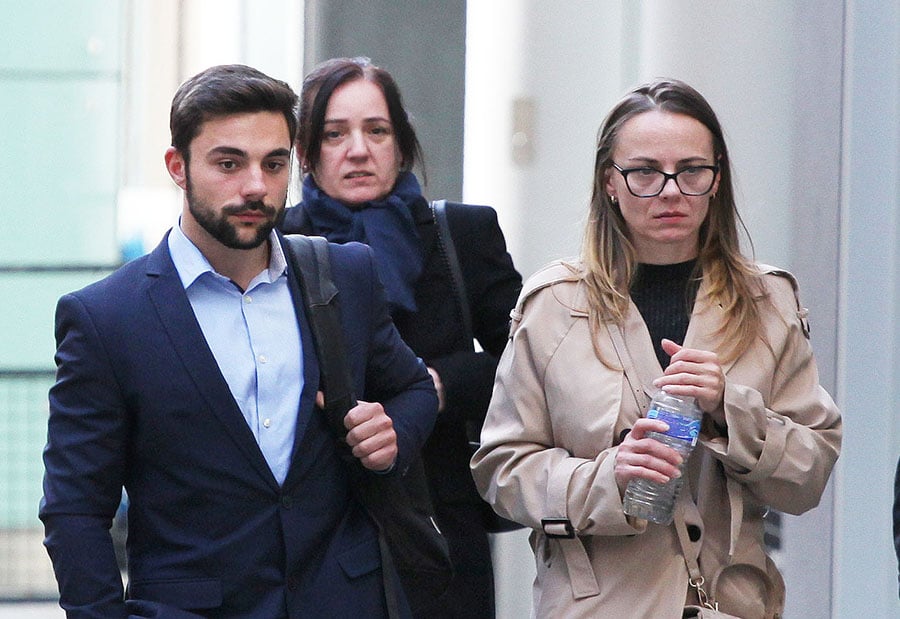
Gabrielle Barbus died on 30 December 2025 following ongoing struggles with his mental health. At the time of his death, he was living with his mother, Georgia Opritescu (pictured right) in Hornchurch, east London. His parents had separated in 2010, divorced in 2013, and Gabrielle’s day‑to‑day upbringing had primarily been undertaken by his mother, although his father Stefan Barbus remained involved in his son’s life.
After Gabrielle’s death, discussions between his parents regarding funeral arrangements quickly broke down. Central to the dispute was their fundamentally different view of what constituted an appropriate and respectful disposition of their son’s body. Mr Barbus maintained that, as Gabrielle had been baptised into the Orthodox Christian tradition and had attended church with him, burial was not only religiously mandated but essential to safeguard his son’s soul. By contrast, Ms Opritescu stated that Gabrielle had not been raised in a religious household and that cremation, followed by scattering of the ashes in nature, aligned with the way he lived his life.
In early 2026, Ms Opritescu obtained a grant of letters of administration without notice to Mr Barbus. Upon discovering this, and learning that the coroner intended to release Gabrielle’s body to the mother alone, Mr Barbus applied to the High Court and secured an injunction preventing disposal of the body pending judicial determination.
The issue before the court concerned whether Gabrielle should be cremated or buried. Mr Barbus sought burial in accordance with religious doctrine, asserting that cremation would imperil his son’s spiritual wellbeing. Ms Opritescu, with whom Gabrielle lived, wished for cremation and the scattering of her son’s ashes in Devon, reflecting what she said were her son’s values and personal preferences.
The matter came before Judge Jonathan Klein in the High Court of Justice in London. Both parents gave evidence, as did Gabrielle’s older brother, Antonio (pictured left), who supported his mother’s position and argued that cremation would better reflect his brother’s personality and values. The court heard that there was no written indication from Gabrielle regarding his funeral wishes. The judge noted the deep emotional distress felt by both parents, emphasising that each held sincerely held and opposing beliefs regarding what constituted a respectful and appropriate act.
Mr Barbus emphasised the religious significance of burial within Orthodox Christianity, describing burial as a matter of respect and duty to his son and one which carried profound spiritual consequences:
“To me, what is at stake is Gabrielle’s soul. He was baptised into our faith and never rejected it.”
As an alternative should cremation be ordered, Mr Barbus requested that his son’s ashes be interred in a dedicated place where family members could visit and observe religious customs, including lighting candles.
Ms Opritescu argued that cremation best reflected her son’s identity and his love of nature, expressing a desire that his ashes be returned to the landscape of Devon.
She told the court:
“Gabrielle did not grow up in a religious household. He would not want to be confined. He should be free, returned to the nature he loved.”
Burial would cause her significant distress, she added.
Having heard submissions, the judge reserved his decision, acknowledging the “very difficult” nature of the case and the necessity of reflecting carefully on the evidence before determining what arrangements should now be made.













One Response
Personally, I would favour the argument for burial. The father has a sincerely held belief that his son’s body should be whole. Cremation would destroy the body, but without any obvious benefit, nor any obviously strong reason (religious, moral, or otherwise) for preferring it. The deceased’s son’s wishes are unknown and he may not have considered the point.