


A court has upheld the will of a 46-year-old woman who left her £500,000 estate in trust for her teenage daughter, and rejected claims the will was replaced favour of her “abusive and toxic” partner.
Chief Master Karen Shuman upheld the 2022 will of Kassy Sinar, who died in October 2023 aged 46, and rejected a 2023 will her former partner Cengiz Arif (pictured) produced, under which he was to be the sole beneficiary.
The judge rejected the 2023 will as a forgery and said she was “satisfied there has been a fraud in this case”.
Ariz was also removed as executor of Ms Sinar’s estate and trustee of the will trust, restrained from dealing with any estate assets, and ordered to disclose details of rental income he had received from a property belonging to Ms Sinar.
“Given the forgery and level of fraud in this case… I’m deeply concerned that he will try to remove estate assets,” the judge said.
Ms Sinar’s 2022 will left the entirety of her estate in trust for the benefit of her 16-year-old daughter.
Following Ms Sinar’s death, Arif produced a document he claimed was her true last will, dated 10 May 2023, under which everything went to him. He also claimed he and Ms Sinar had been secretly married in Cyprus in 2006.
A legal team from Rothley Law, led by Verity Hudson and Adam Draper, acted for Ms Sinar’s brother Myles and his wife Michelle in their claim against Arif and uncovered irregularities in the documents he produced.
In a statement on the firm’s website, Rothley law said: “Working with the Cyprus Supreme Court and the Representative Office of the Turkish Republic of Northern Cyprus (TRNC), we confirmed not only that no marriage was recorded on the alleged date, but also that the registrar named on Mr Arif’s document wasn’t even working that day.”
With regard to the will, the statement added: “We obtained an expert handwriting report which provided a strong professional opinion that the signature was a simulation.”
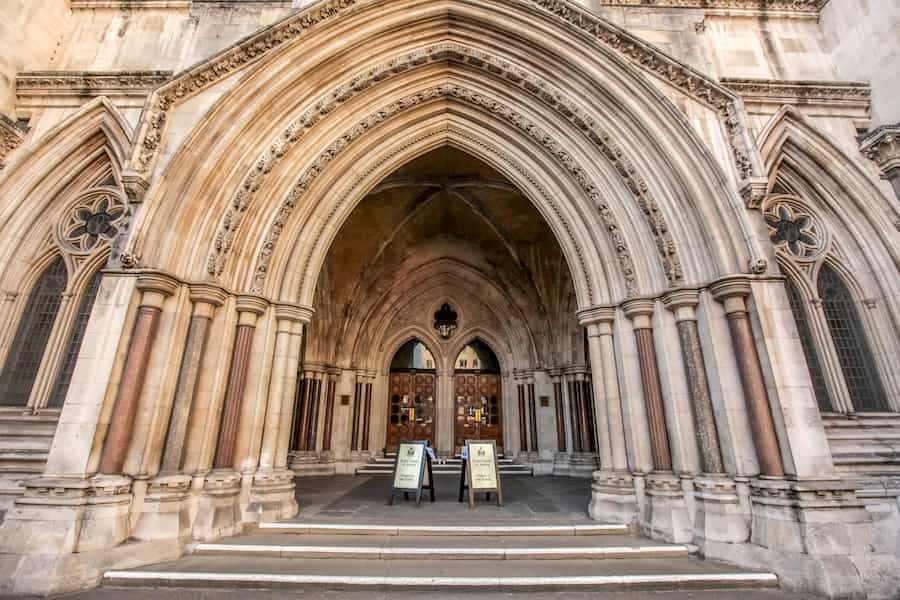
During the hearing at The Royal Courts of Justice, the judge said: “Cengiz produced in these proceedings a false document. He was never married to Kassy.
“I’m satisfied that the marriage certificate is a forged document.”
The judge went on to find that the 2023 will produced by Cengiz was also a fake, noting: “The explanation Cengiz gave of how the 2023 will came to be prepared is preposterous. It is indeed incredible…
“It is inherently implausible that Cengiz’s case is correct…
“I’m satisfied on the basis of the evidence that has been presented to me that the 2023 will was forged. The will relied on by Cengiz was not the last will of Kassy. I also find that the marriage certificate was a forged document.
“The 2023 will is a forgery. I’m satisfied that there has been fraud in this case.
“This is an estate that Kassy wanted to go to her daughter not her sometime partner and the father of her child.
“I therefore pronounce in favour of the 2022 will. In light of my findings it’s quite clear that Cengiz should be removed forthwith as executor of the estate and trustee of the will trust.”
She continued: “Cengiz’s conduct demonstrates a want of honesty and fidelity. I consider it both necessary and proportionate to restrain him from dealing with any estate assets.
“I’m very concerned that he has advanced a case on the basis of a forged will supported by a forged marriage certificate and has ignored court orders.”
Arif was ordered to pay Mr Sinar’s costs of the case, which his barrister Sarah Harrison said came to around £206,000.
The judge ordered an up front payment of £120,000 on account of those costs.
Verity Hudson from Rothley Law said after the case: “This was a complex and emotional case that required careful investigation. Having worked closely with the family since 2023, we’re so pleased to have helped secure the right outcome for them.”
Kate Harris, partner in the private wealth disputes team at Birketts LLP, said the case underscores the critical importance of robust will‑making processes and the vigilance of the courts in protecting vulnerable individuals and their families.
“Cases involving alleged forged wills or fabricated marriage certificates are thankfully rare, but when they arise, they can cause immense emotional strain for grieving relatives,” she said.
“In this case, the court’s findings of deliberate forgery highlight how far some individuals may go in an attempt to redirect an estate for their own benefit.
“This case is also a reminder that clear, professionally drafted wills, coupled with reliable records of relationship status and estate planning intentions, are essential safeguards. Where disputes do surface, early specialist advice can be crucial in preserving assets, protecting beneficiaries, and securing swift court intervention where necessary.
“Ultimately, this case is a salient reminder that the law provides strong remedies against fraud, and that the courts will act decisively to uphold the wishes of the deceased and protect the interests of vulnerable beneficiaries.”










One Response
Will such cases become more commonplace if the formalities around will-making are loosened?