
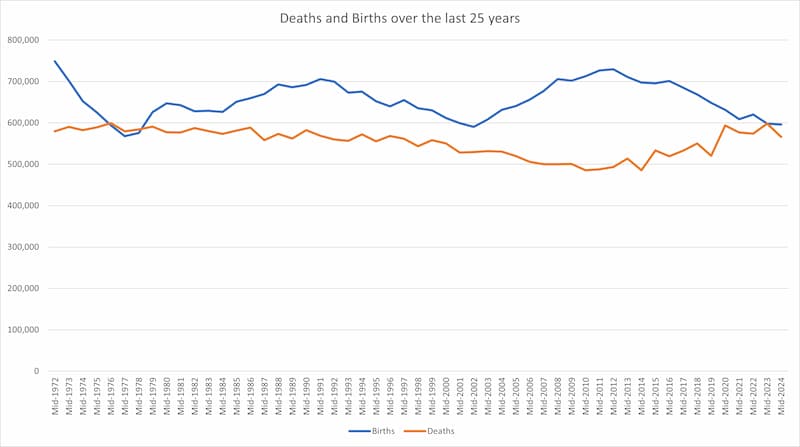
The birth rate has fallen to its lowest level since mid-2002 according to the latest Office for National Statistics population estimates, with an estimated 596,000 births in the year to mid-2024.
The number represents a fall of 2,400 from the same time mid-2023.
The number of deaths has also fallen compared with 2023. There were 566,000 deaths to the year mid-2024, a fall of 32,000 year on year and the lowest figure since mid-2019 before the COVID-19 pandemic.
The number of people aged over 65 continues to grow. Up by 1.8% in England and 1.5% in Wales. And the split between genders widens with age. At the age of 50 there are only 4% more women than men. However, by the age of 75 there are 13% more women, and by the age of 90, there are almost twice as many women.
For estate planning professionals Helen Morrissey, head of retirement analysis at Hargreaves Lansdown said the gender gap is most prevalent when it comes to pensions and investments.
“Pensions will usually be the biggest investment you have in your life, but it’s an area where women have fallen way behind. Government figures put the gender pensions gap at 48% in 2020/22. According to the data, women aged 55 to 59 had built pension pots averaging £81,000 compared with £156,000 for men. This could translate into £5,000 less in income each year – or roughly half.”
Ultimately, it’s an issue that needs to be dealt with by wider reform – more flexible working and provision of good quality affordable childcare.”
The ONS say the areas experiencing the highest rate of population growth were City of London (11.1%), Oadby and Wigston (3.1%), and Preston (2.9%). The greatest rates of population decrease were Isles of Scilly (-2.8%), Kensington and Chelsea (-1.4%) and Lambeth (-0.6%).
Commenting on the findings, the ONS’s Nigel Henretty said:
“The population of England and Wales has increased each year since mid-1982. The rate of population increase has been higher in recent years, and the rise seen in the year to mid-2024 represents the second largest annual increase in numerical terms in over 75 years. Net international migration continues to be the main driver of this growth, continuing the long-term trend seen since the turn of the century.”