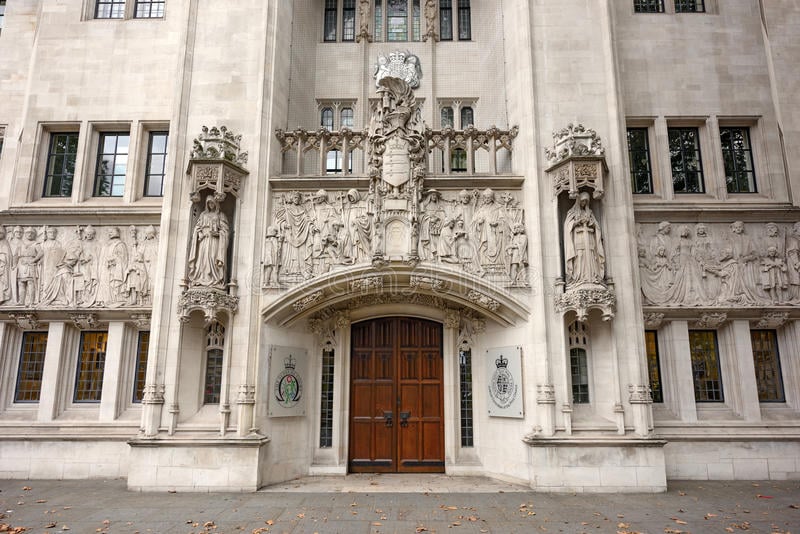

The Supreme Court has ruled that it is no longer necessary for the Court of Protection to make the final decision on restricting clinically assisted hydration and nutrition (CAHN) to patients in an irreversibly unconscious state.
According to the judgment, when families and medical staff are in agreement, and it is in the best needs of the patient, medical staff will be able to withdraw apparatus such as feeding tubes to effectively end the person’s life without applying to the Court of Protection (CoP).
The ruling comes after judgment was laid down in the case of NHS Trust v Y [2018] UKSC 46.
Mr ‘Y’, a banker, suffered from severe brain damage following a heart attack last June. Because it was deemed ‘highly unprobable’ Mr Y, would recover, both family and medical professionals argued that it was more humane to remove his feeding tubes and allow him the dignity of death. Despite dying before the case was concluded, the case continued for a ruling to be made.
It was considered by the Supreme Court that the fundamental question facing a doctor, or a court, considering treatment of a patient who is not able to make his or her own decision, is not whether it is lawful to withdraw or withhold treatment, but whether it is lawful to give it.
A doctor is entitled to protection from liability conferred by section 5 of the Mental Capacity Act (“MCA”) 2005 [92] if he or she holds a reasonable belief that giving treatment is in the patient’s best interest.
Will this help alleviate the applications being made to the CoP?
Over 15,000 applications have been made to CoP in 2018 alone, of which those involving patients requiring CAHN is unknown, nevertheless there will be many families who will be appreciative of having the power to make the decision without the additional stress of taking the decision to court.
According to Her Honour, Judge Hilder, senior judge for the Court of Protection, in a presentation made at the Solicitors for the Elderly conference in 2018, applications (to CoP) have risen by 50% in the past decade and over two-thirds of the applications relate to over-65s. A concern made by many is that this landmark ruling restricting the added protection of the law could increase the exploitation of society’s most vulnerable and voiceless individuals. Dr Peter Saunders, director of anti-assisted dying group Care Not Killing, said that he is “very concerned and quite disappointed by the Supreme Court ruling” because patients are “effectively going to be starved and dehydrated to death.”
How do those in the private client sector feel on this highly charged issue? Does it alleviate the additional stress and torment for already grieving families? Or, does the restriction of legal protections open the door for exploitation of our most vulnerable?
For more information on the judgement please visit https://www.supremecourt.uk/cases/uksc-2017-0202.html