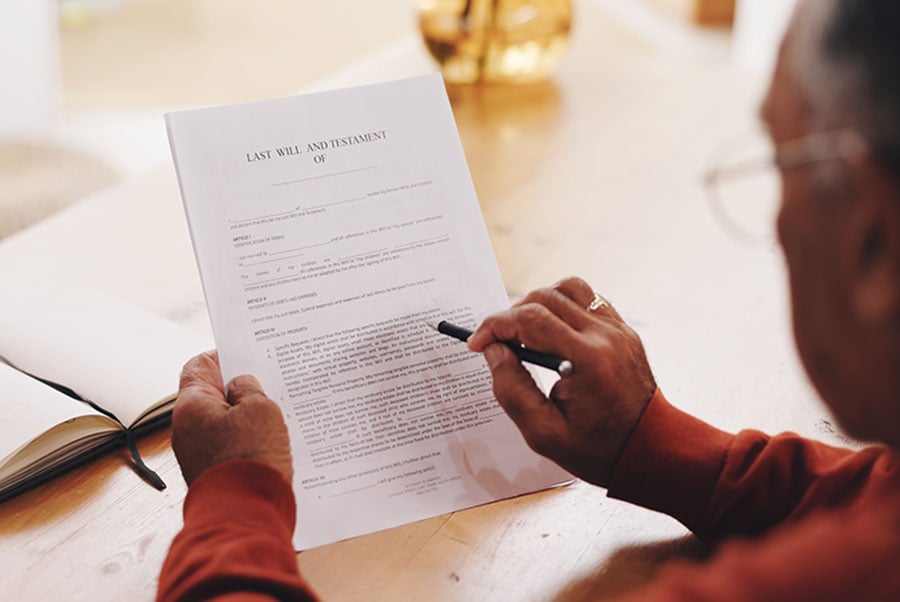

Enos McLean, now over 80 years old and executor of his father’s estate, has been left shocked after being informed that the family of a deceased employee is set to sue his dead father’s estate twenty years after it was wound up.
Frederick Forbes worked for Enos McLean senior’s painting and decorating firm between the years of 1957 and 1964. During this time, Forbes was exposed to asbestos dust and fibres.
In 2014, Frederick Forbes died of mesothelioma, an occupational disease attributed to prolonged asbestos inhalation.
Following the revelation that his death was an occupational disease, the family of Frederick Forbes have been granted leave to sue the executor of the previous employer for damages.
Despite the defendant dying and the business being closed for over twenty years, the family look to seek damages from the decorating firm’s liability insurers.
When the issue was brought to Enos McLean Junior’s attention, he informed the Scottish Court of Session that he was declared executor in 1994, following the death of his father. By March 1995, he had completed the administrative duties and wound up the estate.
McLean argues it was at this point his role of executor was complete and ultimately ceased. He has called for the case to be dismissed as irrelevant and lacking in specification.
The legal arguments in favour of the Forbes family involved the use of 100 year old historical cases. The family used the liability of discharged testamentary trustees after the failure of the City of Glasgow Bank in 1878, as an example to support their case.
The presiding Judge, Lord Clark, agreed with the claimants, allowing them to pursue their claim. However, serious doubts as to whether the insurance policy can be considered an asset of McLean senior’s estate remains unclear.
Clark referred to cases like this as becoming ‘an unfortunate burden,’ for the executors or trustees that face the potential uncomfortable process of being sued.
Similar cases like this, looking to sue an ancient estate, may be spurred on by the recent judgement and look to seek damages of their own.
Should the innocent executor of an estate be subject to trial in this way? Has enough been done to protect Mr McLean in this instance?