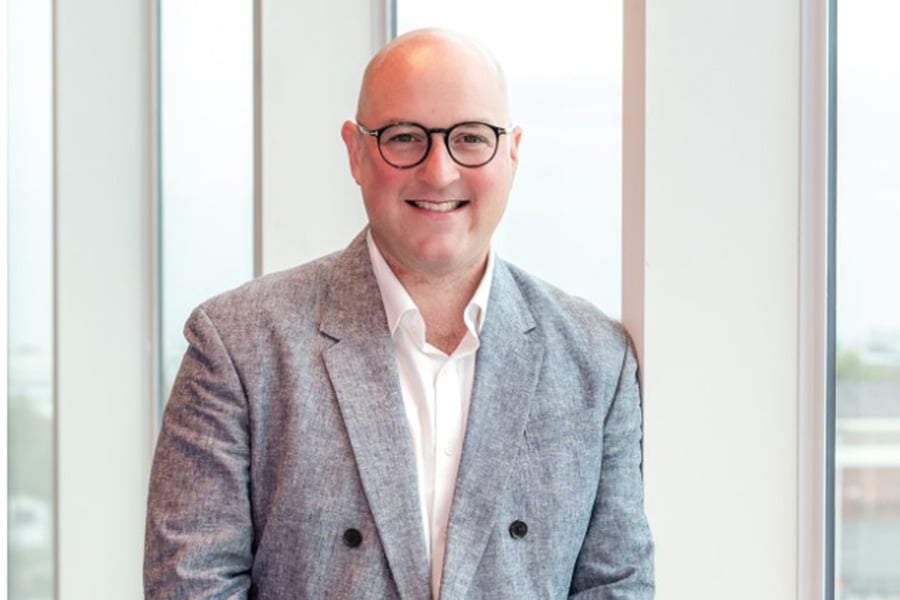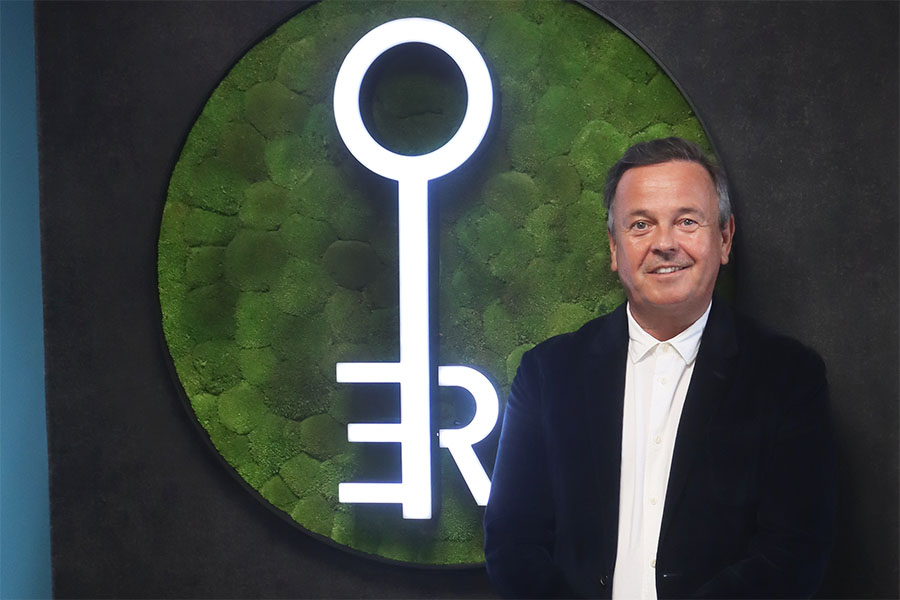

Aidan Hutchings is the founder and managing director of Estate Research, one of the UK’s leading probate genealogy firms. Having started his career in probate research in London in the mid-1990s, Aidan established Estate Research in 2001, initially working alone from his spare bedroom.
Twenty-five years later, the business has grown into a £14 million company employing over 100 people, with offices across the UK and Canada. Under Aidan’s leadership, Estate Research has expanded from tracing missing heirs to providing a comprehensive range of probate research, estate administration support and professional training services.
What was your career path to your current role?
I fell into probate genealogy completely by chance. In 1995, I spotted an advert in the London Evening Standard looking for a researcher who needed to be available for immediate travel. I applied, got the job and started the following week. I had no idea what probate genealogy was at the time, but I loved it from the start.
I spent the next few years working for two London-based probate research firms, learning the industry from the ground up. It was a very different world back then. Research meant physically visiting record offices, working through microfiche and travelling around the country to meet beneficiaries.
By 2001, I decided to go it alone and set up Estate Research from the spare bedroom of my flat in Shepherd’s Bush. I had a computer, a telephone, a set of birth, marriage and death indexes and not much else.
The business grew steadily, but there were a few defining moments along the way. When genealogical records became available online and competition increased, we started working directly with local authorities. Relocating our headquarters to the Northwest where there are some fantastic people, establishing our Private Client department, and the launching of our Estate Research Private Client Learning Hub.
Looking back, much of our success has come from recognising when the industry was changing and reacting differently to others.
Did you have any other career ambitions?
Not particularly! I didn’t grow up wanting to be a probate genealogist, mainly because I had absolutely no idea the profession existed.
I certainly never had ambitions to run a business. When I started Estate Research, the plan was simply to make a decent living doing something I enjoyed. For the first few years, I was perfectly happy working on my own.
As the opportunities came along, my ambitions grew with the business. I think that’s probably the best way to describe my career. There was never some grand master plan more a series of decisions, a bit of good timing and having the right people around me.
What keeps you motivated in your work?
Fundamentally at heart I still enjoy the job. Still to this day there is something exciting about tracking down beneficiaries and solving cases that are difficult to crack.
These days, my motivation is probably a little different. We’ve built a business that offers far more than traditional heir tracing, and there’s still plenty of opportunity to develop and expand what we offer.
I’m particularly proud of the team we’ve built. Many of the people who joined us when we were a much smaller company have played a huge part in getting us to where we are today.
I also enjoy proving that you don’t necessarily have to follow the crowd. Some of our biggest successes have come when we’ve taken a completely different approach to everyone else.
What has been the best development in Probate Genealogy in the last 20 years?
For me, it’s undoubtedly been the digitisation of records and the accessibility of information.
When I started, genealogical research was an entirely different process. You could spend hours in a record office searching through physical indexes, it could take a day to do a simple family tree.
The availability of records online transformed the industry. It made research faster, more accessible and opened the door to an entirely different way of working.
Of course, it also created a huge amount of competition. Suddenly, anyone with a computer could set themselves up as a genealogist, which wasn’t necessarily a good thing!
But ultimately, technology has allowed us to spend less time simply finding information and more time investigating, verifying and evidencing it. That’s where the real value of professional probate genealogy lies today.
And the worst?
I think one of the biggest problems has been the assumption that because information is now so readily available online, genealogy has somehow become straightforward.
It hasn’t.
Anyone can subscribe to a genealogy website and start building a family tree, but that doesn’t mean the information is accurate or that the conclusions can be relied upon when distributing an estate. We regularly see how complicated family structures can become, particularly where there are unknown relatives, overseas connections or conflicting records. Technology is a fantastic tool, but it isn’t a substitute for experienced researchers who know how to interpret evidence properly. In probate, getting the family tree wrong can have very serious consequences.
If you could bring in one change for the sector, what would it be and why?
I’d love to see probate genealogy become regulated. I fully appreciate it is a small and quite niche industry and is often overlooked – but our work has a direct legal impact on people’s entitlement to inheritance and I believe there should be a specific regulatory body so that solicitors can be confident with who they’re using.
What’s the biggest surprise of your career?
The response to our webinars and Learning Hub. We started with just three webinars during lockdown, and I never imagined they would grow into such a significant part of what we offer. The appetite for accessible learning, the engagement from private client practitioners and the generosity of speakers willing to share their expertise have all exceeded my expectations. It’s been a real pleasure to see people come back regularly and hear how they’ve put that learning into practice.
What’s been the best decision of your career ?
Relocating back to the North West was both a personal and professional decision. Having grown up in Wigan, it felt like the right move, but it has also proved to be one of the best things I could have done for the business. There are fantastic people and real talent here, and we’ve been able to build a team whose expertise and commitment have been central to our growth.
In 2019, we took a major step forward by purchasing our own head office and undertaking a complete refurbishment. The move wasn’t just about the building itself; it changed our mentality as a business. We increased our footprint from 2,000 sq. ft to 12,000 sq. ft, giving ourselves the space and confidence to plan for the future. At the time, it felt far bigger than we needed for a team of just 25 people, but we were investing in where we wanted the business to go, not where it was at that moment. Seven years later, that foresight has paid off. The office is thriving, supporting a significantly larger team, and looking back, the move was a pivotal moment in our growth story.
Around 95% of our head office staff live within five miles of the office, which gives the business a strong connection to the local community. I’m proud that we’ve created opportunities for people close to home to develop specialist skills and build careers in an industry they might never otherwise have considered.
What advice would you like to give to someone just starting out?
Become an expert in whatever you do, and take the time to learn the fundamentals. I started at the bottom, which gave me the opportunity to understand every aspect of probate genealogy, from the research itself to how solicitors rely on our findings. Records, access to information and the law have all changed over the years, but a thorough understanding of genealogy remains the foundation. Keep learning, ask questions and understand why you’re doing something, as well as how.
An expert understanding of your industry helps you make informed decisions and set a clear direction as a business owner.
Tell us something people may be surprised to know about you…
Despite spending my career researching other people’s families, I’ve barely scratched the surface of my own. You’d think I’d have an extensive family tree by now, but it’s one of those things I keep meaning to get around to. Perhaps I need to take my own advice and bring in the experts!
If you’d like to appear in a profile, email press@todayswillsandprobate.co.uk with ‘Profile’ in the subject line.